
The evidence: what clinical trials show
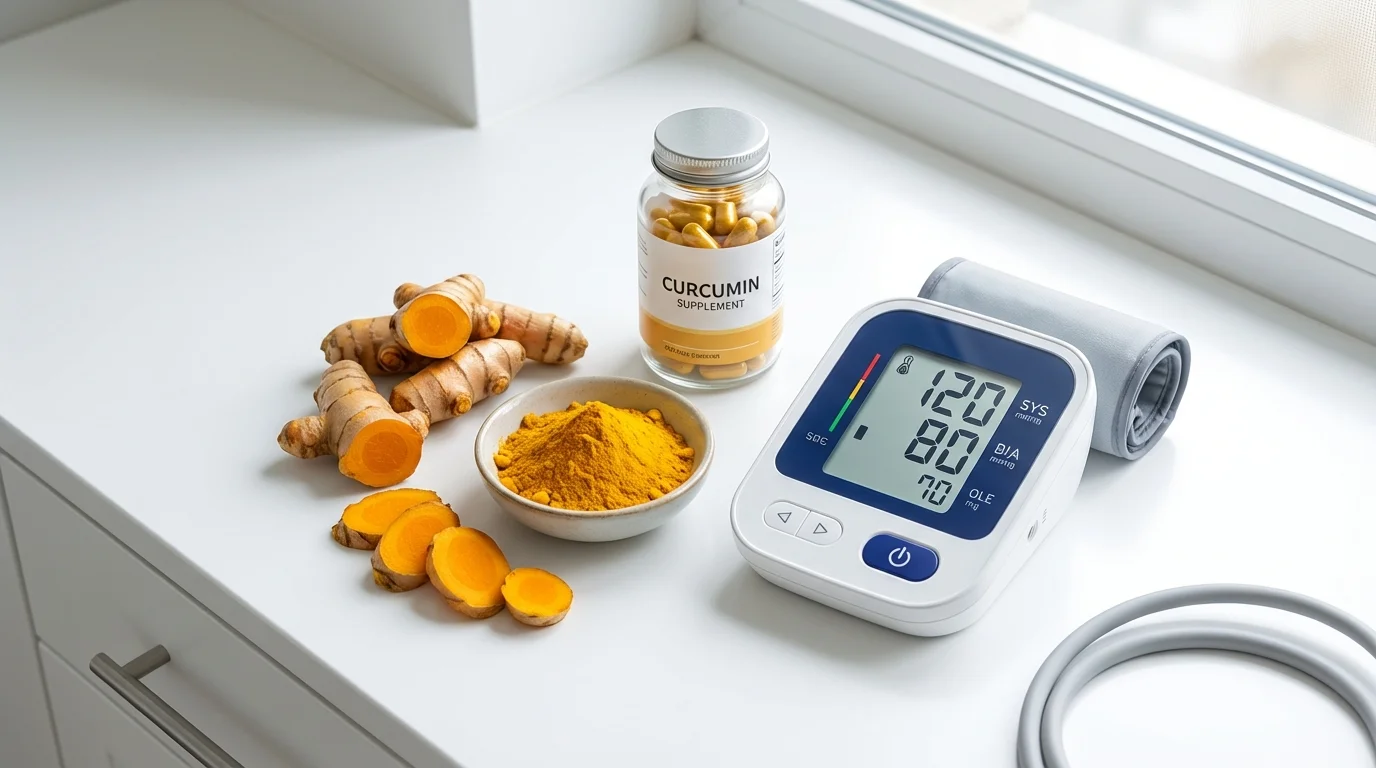
Multiple systematic reviews and meta-analyses have examined whether curcumin supplementation lowers blood pressure. The results are consistently positive, though modest.
A 2023 systematic review and dose-response meta-analysis published in Clinical Nutrition ESPEN analyzed randomized controlled trials and found that curcumin supplementation significantly reduced systolic blood pressure by an average of 2.02 mmHg and diastolic blood pressure by 0.82 mmHg. The effect was more pronounced in people with metabolic syndrome, diabetes, or existing hypertension.
A more recent umbrella review in Frontiers in Pharmacology (2025) synthesized data from multiple meta-analyses and confirmed these findings, showing systolic reductions of 2-5 mmHg depending on the population studied and duration of supplementation.
Importantly, a December 2025 meta-analysis focused specifically on people with prediabetes and type 2 diabetes found even stronger effects: curcumin/turmeric supplementation in these populations produced greater systolic blood pressure reductions and improved other cardiovascular markers. This suggests curcumin may be particularly beneficial for people with metabolic dysfunction.
Context matters
How curcumin lowers blood pressure
Curcumin is not a single-mechanism drug. It influences multiple biological pathways that collectively contribute to blood pressure regulation.
Anti-inflammatory effects
Chronic low-grade inflammation damages blood vessels and contributes to hypertension. Curcumin is a potent anti-inflammatory compound. It inhibits NF-kB (a key inflammatory signaling molecule), reduces inflammatory cytokines like IL-6 and TNF-alpha, and lowers C-reactive protein levels. By reducing systemic inflammation, curcumin helps preserve vascular health and reduce arterial stiffness.
Nitric oxide and endothelial function
Nitric oxide is a molecule produced by the endothelium (the inner lining of blood vessels) that causes blood vessels to relax and dilate. This dilation lowers blood pressure. Curcumin increases nitric oxide bioavailability, improves endothelial function, and protects nitric oxide from oxidative degradation. Studies show curcumin supplementation improves flow-mediated dilation, a direct measure of endothelial health.
Oxidative stress reduction
Reactive oxygen species (free radicals) damage blood vessels and impair nitric oxide function. Curcumin is a powerful antioxidant that scavenges free radicals and boosts the body's own antioxidant enzymes like superoxide dismutase and glutathione peroxidase. This reduces oxidative stress and protects the cardiovascular system.
Renin-angiotensin system modulation
The renin-angiotensin system (RAS) is a hormonal system that regulates blood pressure and fluid balance. Overactivation of RAS contributes to hypertension. Animal studies suggest curcumin may modulate RAS activity, though the human evidence is still emerging.
The bioavailability problem and solutions
The biggest challenge with curcumin is absorption. Standard curcumin is poorly absorbed in the digestive tract, rapidly metabolized in the liver, and quickly eliminated. When people consume turmeric powder or even plain curcumin supplements, very little reaches the bloodstream.
This is why clinical trials use specialized formulations to improve bioavailability.
Piperine (black pepper extract)
Piperine is a compound in black pepper that inhibits drug metabolism enzymes in the liver and intestines. When 20 mg of piperine is taken with 2,000 mg of curcumin, bioavailability increases by 2,000% (20-fold). This is the most common and cost-effective enhancement strategy.
Most effective curcumin supplements include piperine or BioPerine (a standardized black pepper extract) in the formulation.
Phytosome formulations
Phytosomes bind curcumin to phospholipids (fats), making it more absorbable. Meriva is a well-studied phytosome formulation that shows significantly higher blood levels of curcumin compared to standard extracts.
Nano-curcumin and liposomal formulations
Nanotechnology reduces curcumin particles to extremely small sizes, improving absorption. Liposomal delivery wraps curcumin in lipid spheres that protect it during digestion and enhance cellular uptake. These formulations are more expensive but show superior bioavailability in studies.
BCM-95 and other whole-turmeric extracts
BCM-95 is a patented curcumin extract that includes turmeric essential oils, which naturally enhance absorption. It has been used in multiple clinical trials and shows better retention time and bioavailability than curcumin-piperine combinations.
| Formulation Type | Bioavailability Improvement | Common Brands | Cost |
|---|---|---|---|
| Standard curcumin (95% extract) | Baseline (very low) | Generic supplements | Low |
| Curcumin + piperine/BioPerine | 2,000% increase vs. baseline | Most brands | Low to moderate |
| Phytosome (e.g., Meriva) | 5-7x vs. curcumin + piperine | Thorne, Jarrow | Moderate |
| BCM-95 | 6-7x vs. standard curcumin | EuroPharma Terry Naturally | Moderate |
| Liposomal or nano-curcumin | 10-40x vs. standard | Various specialty brands | High |
Dosage and timing
Clinical trials showing blood pressure reduction typically used 500-2,000 mg of curcumin per day, divided into 1-2 doses. Most studies lasted 8-12 weeks or longer.
- Standard dosage for blood pressure: 500-1,000 mg curcumin (95% curcuminoids) per day, taken with 5-20 mg piperine or in a phytosome formulation
- Higher doses: Up to 2,000 mg per day in divided doses (1,000 mg twice daily) have been used in studies for metabolic conditions and show slightly stronger effects
- Timing: Take with meals to improve absorption and reduce digestive upset. Curcumin is fat-soluble, so taking it with a meal containing healthy fats enhances uptake
- Consistency: Blood pressure effects require sustained use for at least 8 weeks. Benefits diminish if supplementation is stopped
Safety and tolerance
Interactions with blood pressure medications
Curcumin influences multiple pathways relevant to cardiovascular health, which means it can interact with medications.
Blood thinners (anticoagulants and antiplatelets)
Curcumin has mild antiplatelet effects (it inhibits blood clotting). When combined with blood thinners like warfarin (Coumadin, Jantoven), aspirin, or clopidogrel (Plavix), it can increase bleeding risk. Multiple case reports and studies warn against combining high-dose curcumin with anticoagulants without medical supervision.
If you are on blood thinners, do not start curcumin supplementation without consulting your doctor. Your INR (international normalized ratio) or other clotting measures may need closer monitoring.
Blood pressure medications
Because curcumin modestly lowers blood pressure, combining it with blood pressure medications (ACE inhibitors, ARBs, beta-blockers, calcium channel blockers, diuretics) could theoretically cause blood pressure to drop too low. While this is less common than the bleeding risk with anticoagulants, it is still a consideration.
If you are on blood pressure medication and want to add curcumin, inform your doctor. Monitor your blood pressure readings regularly. If you experience dizziness, lightheadedness, or fatigue, your medication may need adjustment.
Diabetes medications
Curcumin also lowers blood sugar, which means combining it with diabetes medications could increase the risk of hypoglycemia. If you have diabetes and take medication, monitor blood sugar more closely when starting curcumin.
Turmeric vs. curcumin supplements vs. food
There is often confusion about whether to use turmeric powder, curcumin supplements, or just add turmeric to food.
| Form | Curcumin Content | Bioavailability | Best For |
|---|---|---|---|
| Culinary turmeric powder | 2-5% curcumin by weight | Very low without enhancers | Cooking, anti-inflammatory diet |
| Turmeric tea or golden milk | Low curcumin, improved with fat and black pepper | Low to moderate | General wellness, taste |
| Standardized curcumin extract (95%) | High curcumin concentration | Low unless combined with piperine or phytosome | Therapeutic dosing for blood pressure |
| Curcumin + piperine supplement | High curcumin + absorption enhancer | High (2,000% increase) | Blood pressure, inflammation, cost-effective |
| Phytosome or BCM-95 supplement | Moderate to high curcumin, naturally enhanced | Very high | Blood pressure, best bioavailability |
If you are trying to lower blood pressure, culinary turmeric alone is unlikely to provide therapeutic doses. You would need to consume 10-20 grams of turmeric powder daily to match the curcumin content in clinical trials, which is impractical and may cause digestive upset.
Standardized curcumin supplements are the evidence-based choice for blood pressure management.
Who should not take curcumin for blood pressure
- People on blood thinners: Curcumin increases bleeding risk when combined with warfarin, aspirin, or other anticoagulants
- People with bleeding disorders: Hemophilia or platelet disorders make curcumin risky
- Pregnant or breastfeeding women: High-dose curcumin supplements have not been adequately studied for safety in pregnancy
- People with gallstones or bile duct obstruction: Curcumin stimulates bile production, which can worsen these conditions
- People scheduled for surgery: Stop curcumin at least 2 weeks before surgery to reduce bleeding risk
Realistic expectations: what curcumin can and cannot do
Curcumin is not a miracle cure for hypertension. It produces modest blood pressure reductions that are meaningful when combined with other lifestyle interventions but insufficient on their own for most people with diagnosed hypertension.
Think of curcumin as part of a comprehensive approach that includes:
- Dietary changes like the DASH diet
- Regular aerobic and resistance exercise
- Weight loss if overweight (one of the most effective interventions)
- Other evidence-based supplements like magnesium, potassium, or beetroot juice
- Stress management and adequate sleep
- Medications if needed (prescribed and monitored by a doctor)
If you have stage 2 hypertension (systolic above 140 or diastolic above 90), curcumin alone will not bring you into the normal range. It is a supportive intervention, not a replacement for medical treatment.
The bottom line
Curcumin supplementation can reduce systolic blood pressure by 2-5 mmHg and diastolic by 1-2 mmHg after 8-12 weeks of consistent use. The effect is modest but evidence-based and clinically meaningful when combined with other lifestyle changes.
Choose a curcumin supplement with piperine or a phytosome formulation to ensure adequate absorption. Aim for 500-1,000 mg of curcumin per day, taken with meals.
The most important caveat: curcumin interacts with blood thinners and may interact with blood pressure medications. Always consult your doctor before adding curcumin to your regimen, especially if you take any cardiovascular medications. Track your blood pressure readings consistently to monitor the effect.