
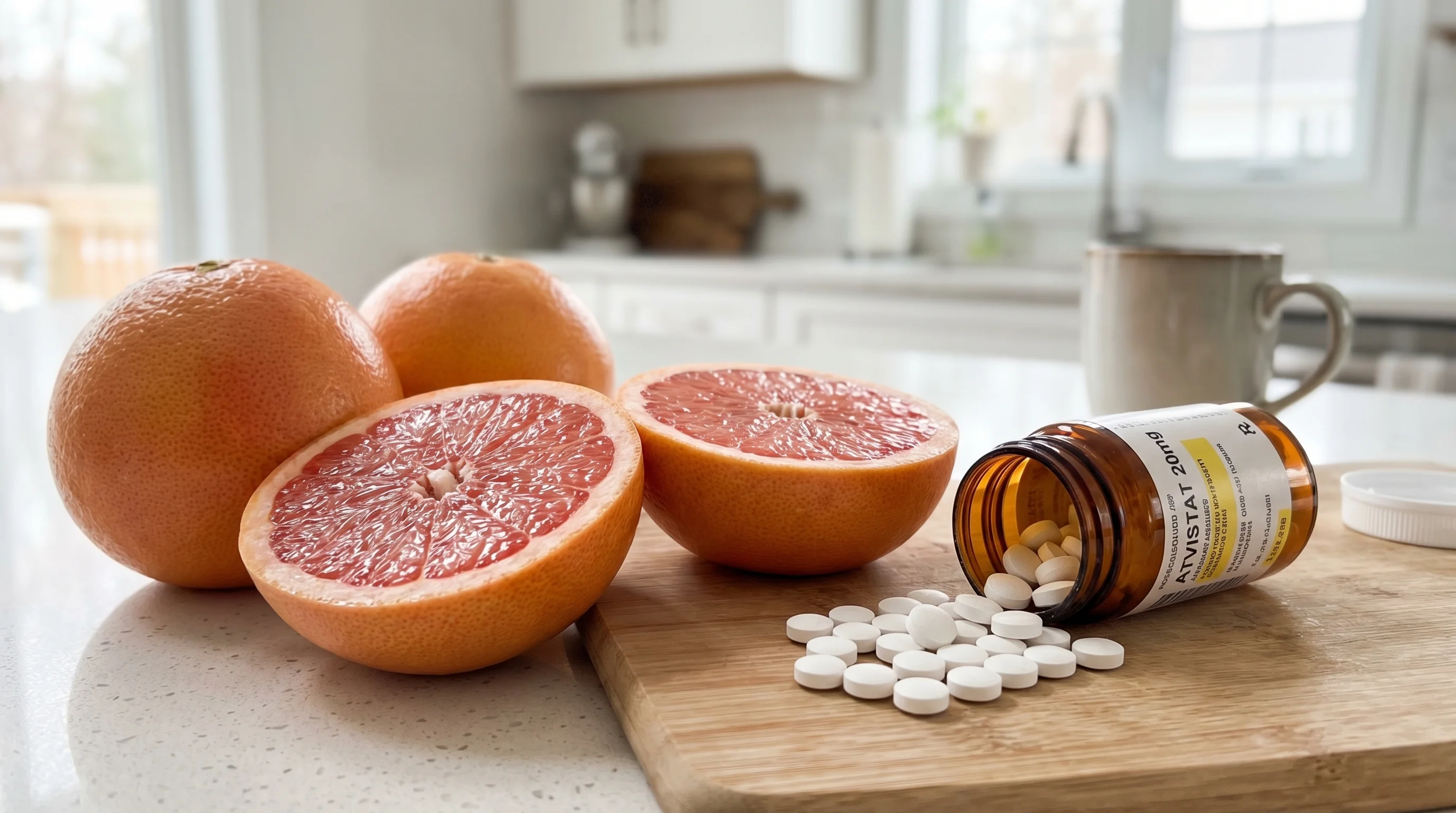
If you take blood pressure medication, you may have heard that grapefruit is off-limits. This is not just a myth. Grapefruit and grapefruit juice can interact with certain blood pressure drugs in a way that makes them much stronger than intended.
The result can be dangerously low blood pressure, dizziness, fainting, or other serious side effects. But not all blood pressure medications interact with grapefruit. Some are completely safe.
This guide explains which medications you need to worry about, which are safe, how grapefruit causes the interaction, how much is too much, and what other fruits to avoid.
How Grapefruit Interacts with Medications
When you take a medication by mouth, it travels to your stomach and small intestine. There, an enzyme called CYP3A4 breaks down part of the drug before it reaches your bloodstream. This is called first-pass metabolism.
Grapefruit contains natural chemicals called furanocoumarins. These compounds block the CYP3A4 enzyme. When the enzyme is blocked, more of the medication makes it into your blood. Sometimes two to four times more.
This was discovered by accident in the 1990s. Researchers studying a blood pressure drug used grapefruit juice to mask the taste of alcohol in a study. They noticed the medication levels in participants were far higher than expected. Further investigation revealed the grapefruit was the culprit.
Which Blood Pressure Medications Interact with Grapefruit
Not all blood pressure medications are broken down by CYP3A4. Only medications that rely heavily on this enzyme for breakdown will interact with grapefruit.
The most affected class is calcium channel blockers. Some calcium channel blockers have strong interactions, while others have weaker or no interactions.
Calcium Channel Blockers with Strong Interactions
These medications should not be taken with grapefruit:
- Felodipine (Plendil) - blood levels can increase by 50-200%
- Nifedipine (Procardia, Adalat) - blood levels can increase by 100-300%
- Nisoldipine (Sular) - blood levels can increase by 300-600%
- Nimodipine (Nimotop) - used for brain blood vessel problems, not typical hypertension
These interactions are significant. A 2006 study in the American Journal of Hypertension found that grapefruit juice tripled nisoldipine blood levels and caused significant blood pressure drops in healthy volunteers.
Calcium Channel Blockers with Weak or Uncertain Interactions
These calcium channel blockers have weaker interactions, but caution is still advised:
- Amlodipine (Norvasc) - blood levels increase by 15-25%. Many doctors consider small amounts of grapefruit acceptable, but you should ask your doctor.
- Verapamil (Calan, Verelan) - minimal interaction in most people, but effects vary.
Blood Pressure Medications That Are Safe with Grapefruit
The following medication classes do not interact with grapefruit and are safe to take with grapefruit products:
- ACE inhibitors - lisinopril (Zestril, Prinivil), enalapril (Vasotec), ramipril (Altace), perindopril (Coversyl)
- ARBs (Angiotensin Receptor Blockers) - losartan (Cozaar), valsartan (Diovan), irbesartan (Avapro), candesartan (Atacand)
- Beta blockers - metoprolol (Lopressor, Toprol), atenolol (Tenormin), bisoprolol (Zebeta), carvedilol (Coreg)
- Diuretics - hydrochlorothiazide (HCTZ), furosemide (Lasix), spironolactone (Aldactone), indapamide
If you are on one of these medications and want to eat grapefruit, you are in the clear. For more details on different blood pressure medication classes, see our complete guide to blood pressure medications.
How Much Grapefruit Causes a Problem?
Even small amounts of grapefruit can cause an interaction if you are on a sensitive medication like felodipine or nifedipine.
Studies show that one 200ml glass (about 6-7 ounces) of grapefruit juice is enough to significantly increase blood levels of interacting medications. The effect is dose-dependent. More grapefruit means a stronger interaction.
Whole grapefruit also causes the interaction, not just juice. Half a grapefruit contains similar amounts of furanocoumarins as a glass of juice.
How Long Does the Interaction Last?
The CYP3A4 enzyme in your gut lining is permanently inactivated by grapefruit compounds. Your body needs time to produce new enzyme. This takes about 24 hours.
The practical result is that the interaction can last up to 24-72 hours after you consume grapefruit. This is why you cannot avoid the interaction by timing your grapefruit and medication separately.
If you drink grapefruit juice with breakfast and take nifedipine at dinner, the interaction will still occur.
Symptoms of a Grapefruit-Medication Interaction
If you consume grapefruit while taking felodipine, nifedipine, or nisoldipine, you may experience symptoms of medication overdose. These are the same as common side effects of calcium channel blockers, but more severe:
- Dizziness or lightheadedness, especially when standing up
- Fainting or near-fainting
- Rapid or pounding heart rate
- Flushing or feeling unusually warm
- Severe headache
- Swelling in ankles, feet, or lower legs
- Dangerously low blood pressure (systolic below 90 mmHg)
In rare cases, severe interactions can lead to heart rhythm disturbances or shock. If you develop severe dizziness, fainting, or chest pain after consuming grapefruit while on an interacting medication, seek emergency medical care.
Table: Blood Pressure Medications and Grapefruit Safety
| Medication Class | Examples | Safe with Grapefruit? |
|---|---|---|
| Calcium Channel Blockers (dihydropyridines) | Felodipine, nifedipine, nisoldipine | No - avoid grapefruit completely |
| Calcium Channel Blockers (other) | Amlodipine, verapamil | Weak interaction - ask your doctor |
| ACE Inhibitors | Lisinopril, enalapril, ramipril, perindopril | Yes - safe |
| ARBs | Losartan, valsartan, irbesartan, candesartan | Yes - safe |
| Beta Blockers | Metoprolol, atenolol, bisoprolol, carvedilol | Yes - safe |
| Diuretics | Hydrochlorothiazide, furosemide, spironolactone | Yes - safe |
Other Citrus Fruits That Interact
Grapefruit is not the only fruit that contains furanocoumarins. Other citrus fruits in the same family can also cause interactions.
Fruits to Avoid
- Seville oranges (bitter oranges) - often used in marmalade, orange liqueurs, and some cooking recipes
- Pomelos - large citrus fruits similar to grapefruit, common in Asian cuisine
- Tangelos - a hybrid of tangerine and grapefruit
Fruits That Are Safe
These citrus fruits do not contain significant amounts of furanocoumarins and are safe to eat with blood pressure medications:
- Sweet oranges (regular orange juice is fine)
- Mandarins and clementines
- Lemons
- Limes
If you enjoy citrus fruits and want to include them in a heart-healthy diet, check out our guide to foods that lower blood pressure and the DASH diet for blood pressure.
What to Do If You Want to Eat Grapefruit
If you are on felodipine, nifedipine, or nisoldipine and you want to eat grapefruit, the best option is to talk to your doctor about switching to a medication that does not interact.
Safe alternatives include:
- An ACE inhibitor like lisinopril or ramipril (if you do not have a history of ACE inhibitor cough)
- An ARB like losartan or valsartan
- A beta blocker like metoprolol (if appropriate for your heart condition)
- A combination medication that includes a diuretic and an ACE inhibitor or ARB
Your doctor will choose the best alternative based on your overall health, other medications, and how well your blood pressure is controlled. For Australian patients, see our guide to blood pressure medications available in Australia.
Can I Take Grapefruit Seed Extract?
Grapefruit seed extract is sometimes sold as a supplement. It does not contain the furanocoumarins that cause drug interactions, so it is generally safe with blood pressure medications.
However, grapefruit seed extract products have inconsistent quality and may contain other compounds. If you are considering taking it, ask your pharmacist or doctor first. For more on supplements and blood pressure, see our guide to supplements to lower blood pressure.
Does Cooking Grapefruit Destroy the Compounds?
No. Furanocoumarins are heat-stable. Cooking grapefruit, baking it into recipes, or using it in hot tea does not eliminate the interaction.
Real-World Case Studies
Medical literature includes several documented cases of grapefruit-medication interactions:
- A 42-year-old man on felodipine experienced severe dizziness and fainting after drinking two glasses of grapefruit juice daily for three days. His blood pressure dropped to 80/50 mmHg.
- An elderly woman on nifedipine developed severe ankle swelling and headaches after adding daily grapefruit to her breakfast. Her symptoms resolved after she stopped eating grapefruit.
- A study participant on nisoldipine had blood levels over six times higher than expected after consuming grapefruit juice, requiring medical observation.
These cases highlight the unpredictability of the interaction. Some people are more sensitive than others. The safest approach is complete avoidance if you are on an interacting medication.
The Bottom Line
Grapefruit interacts with certain calcium channel blockers like felodipine, nifedipine, and nisoldipine by blocking the CYP3A4 enzyme that breaks them down. This can lead to dangerously high medication levels and low blood pressure.
If you are on one of these medications, avoid grapefruit, grapefruit juice, Seville oranges, pomelos, and tangelos completely. Timing your grapefruit separately from your medication does not help because the interaction lasts 24-72 hours.
If you want to eat grapefruit, talk to your doctor about switching to a medication that does not interact, such as an ACE inhibitor, ARB, beta blocker, or diuretic.
Most blood pressure medications are safe with grapefruit. Always check with your doctor or pharmacist before adding grapefruit to your diet if you are on any medication. Apple cider vinegar is another popular add-on to check, and we cover apple cider vinegar and blood pressure medication separately. For more on managing blood pressure through diet, read about how food affects blood pressure.