
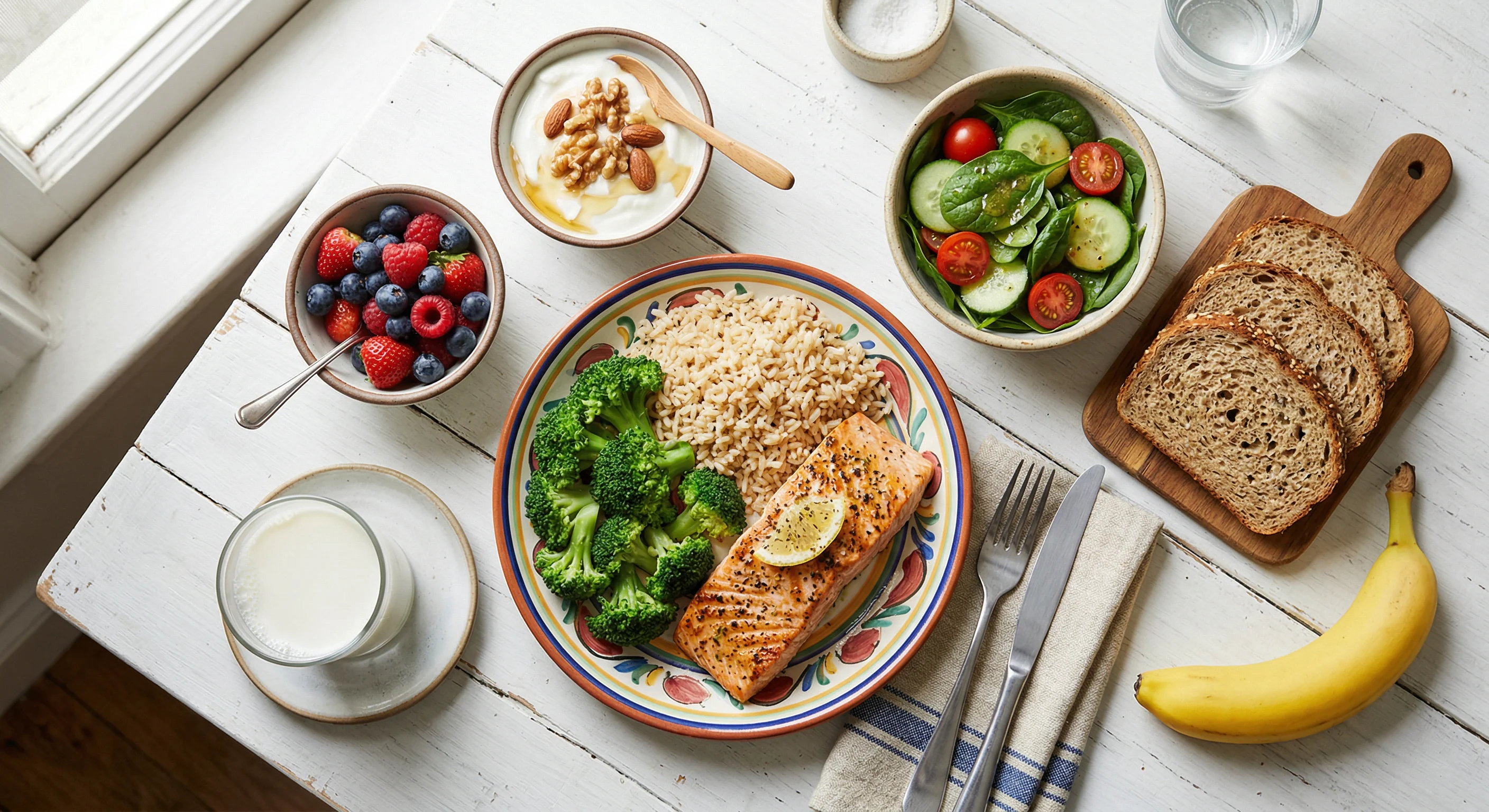
The DASH diet is an eating plan designed to lower blood pressure. It fills most of your plate with vegetables, fruit, whole grains, low-fat dairy, beans and nuts, and it caps sodium at 2,300 mg a day, or 1,500 mg if you want a bigger effect. In the original DASH trial, people with high blood pressure who switched to DASH foods for eight weeks saw their systolic (top) number fall 11.4 mmHg more than people eating a typical American diet, with sodium held at the same level on both diets. A later analysis of a second trial, DASH-Sodium, found that most of the diet's effect showed up within the first week.
This page gives you a 7-day DASH meal plan, the daily servings it is built on, a food list, a shopping list for the week and a simple way to check with your own readings whether the plan is working for you.
What Is the DASH Diet?
DASH stands for Dietary Approaches to Stop Hypertension. Unlike fad diets, it is not about cutting entire food groups or counting calories. Instead, it focuses on eating a balanced mix of whole foods that are naturally rich in the nutrients that lower blood pressure: potassium, magnesium, calcium, and fibre.
At the same time, it limits nutrients that raise blood pressure: sodium, saturated fat, and added sugars.
How the DASH Diet Lowers Blood Pressure
The diet works through several complementary mechanisms:
- Potassium helps your kidneys excrete excess sodium and relaxes blood vessel walls
- Magnesium relaxes smooth muscle in arteries, reducing resistance to blood flow (see our guide to magnesium and blood pressure)
- Calcium supports proper blood vessel contraction and relaxation
- Fibre improves gut health, reduces inflammation, and supports healthy cholesterol levels
- Lower sodium reduces fluid retention and blood volume, directly lowering pressure
For a deeper dive into how these nutrients affect your readings, see our guide to understanding blood pressure readings.
How Fast Does the DASH Diet Lower Blood Pressure?
Most of the effect shows up in the first week. In the DASH-Sodium trial, researchers measured blood pressure every week in 412 adults with raised blood pressure who weren't taking blood pressure medication. Compared with people eating a typical American diet, the DASH group's systolic pressure was about 4 mmHg lower after one week, and it changed little after that (Juraschek and colleagues, Hypertension, 2017).
Cutting sodium worked more slowly. For people on the typical American diet in the same trial, eating less sodium kept bringing blood pressure down through all four weeks it was tested, and the researchers concluded that its full effect may take longer than four weeks to appear. The trial's main results also found that eating DASH and cutting sodium together lowered blood pressure more than either change on its own.
These are averages from a trial where every meal and snack was provided. Your own result will depend on where your readings start, how closely you follow the plan and whether you take blood pressure medication.
DASH Diet Food List and Daily Servings
The standard DASH diet is based on about 2,000 calories a day. This table gives the NHLBI's servings for each food group at that level, what counts as one serving and good choices from the plan. If you need more or fewer calories, the NHLBI scales the servings up or down.
| Food group | Servings | One serving is | Good choices |
|---|---|---|---|
| Grains (mostly whole grains) | 6 to 8 a day | 1 slice bread, 1 oz (about 30 g) dry cereal, or 1/2 cup cooked rice, pasta or oats | Rolled oats, brown rice, quinoa, whole wheat bread and pasta |
| Vegetables | 4 to 5 a day | 1 cup raw leafy greens, or 1/2 cup cut-up raw or cooked vegetables | Spinach, broccoli, carrots, tomatoes, sweet potatoes, green beans |
| Fruit | 4 to 5 a day | 1 medium fruit, 1/2 cup fresh, frozen or canned fruit, or 1/4 cup dried fruit | Bananas, berries, oranges, apples, pears |
| Low-fat or fat-free dairy | 2 to 3 a day | 1 cup (250 ml) milk or yoghurt, or 1.5 oz (about 45 g) cheese | Skim milk, plain low-fat yoghurt, reduced-fat cheese |
| Lean meat, poultry and fish | 6 or fewer a day | 1 oz (about 30 g) cooked meat, poultry or fish, or 1 egg | Skinless chicken, turkey breast, salmon, cod, eggs |
| Nuts, seeds and legumes | 4 to 5 a week | 1/3 cup nuts, 2 tablespoons peanut butter or seeds, or 1/2 cup cooked beans or lentils | Almonds, walnuts, flaxseeds, chickpeas, lentils |
| Fats and oils | 2 to 3 a day | 1 teaspoon vegetable oil or soft margarine, 1 tablespoon mayonnaise, or 2 tablespoons salad dressing | Olive oil, canola oil |
| Sweets and added sugars | 5 or fewer a week | 1 tablespoon sugar, jam or jelly, 1/2 cup sorbet, or 1 cup lemonade | Low-fat sweets such as sorbet, jam or maple syrup |
Whole Grains: 6-8 Servings
One serving equals 1 slice of whole wheat bread, 1/2 cup cooked brown rice or pasta, or 1/2 cup cooked oatmeal. Choose whole grains over refined grains whenever possible, as they retain more fibre, magnesium, and B vitamins.
Vegetables: 4-5 Servings
One serving equals 1 cup raw leafy greens or 1/2 cup cooked vegetables. Prioritise potassium-rich options like spinach, sweet potatoes, tomatoes, broccoli, and carrots. Fresh, frozen, and canned (low-sodium) all count.
Fruits: 4-5 Servings
One serving equals 1 medium fruit, 1/2 cup fresh or frozen fruit, or 60 ml (1/4 cup) dried fruit. Berries, bananas, oranges, apples, and melons are excellent choices. Eat whole fruit rather than juice to get the full fibre benefit.
Low-Fat Dairy: 2-3 Servings
One serving equals 250 ml (1 cup) of skim or low-fat milk or yoghurt, or 45 g (1.5 oz) cheese. Dairy provides calcium, vitamin D, and protein. Choose plain yoghurt over flavoured varieties to avoid added sugar.
Lean Meat, Poultry, and Fish: 6 Servings or Fewer
One serving equals 30 g (1 oz) cooked meat, poultry, or fish, or 1 egg. Choose skinless poultry, fish (especially fatty fish like salmon and mackerel for omega-3s), and lean cuts. Eat red meat less often, and trim the visible fat when you do.
Nuts, Seeds, and Legumes: 4-5 Servings Per Week
One serving equals 1/3 cup nuts, 2 tablespoons peanut butter or seeds, or 1/2 cup cooked beans. Almonds, walnuts, flaxseeds, lentils, and chickpeas are all excellent sources of magnesium, potassium, and plant protein.
Fats and Oils: 2-3 Servings
One serving equals 1 teaspoon of vegetable oil, 1 tablespoon of mayonnaise, or 2 tablespoons of salad dressing. Choose unsaturated fats (olive oil, canola oil) over saturated fats (butter, coconut oil).
Sweets: 5 or Fewer Per Week
One serving equals 1 tablespoon of sugar, jam or jelly, 1/2 cup sorbet, or 250 ml (1 cup) lemonade. The DASH diet does not completely eliminate sweets but limits them significantly.
Sodium Limits
7-Day DASH Diet Meal Plan
Here is a week of meals built from the DASH food groups above. Cook them without added salt. The portions are a starting point, so check each day against the daily servings and add fruit, vegetables or low-fat dairy as snacks where a day comes up short.
| Day | Breakfast | Lunch | Snack | Dinner |
|---|---|---|---|---|
| Day 1 (Monday) | Rolled oats with sliced banana, walnuts and a drizzle of honey, plus 250 ml (1 cup) skim milk | Grilled chicken salad with spinach, tomatoes, cucumber, chickpeas and olive oil vinaigrette, plus 1 whole wheat roll | 1 apple with 2 tablespoons almond butter | Baked salmon with roasted sweet potato, steamed broccoli and a side of brown rice |
| Day 2 (Tuesday) | Whole wheat toast with mashed avocado and a poached egg, plus 1 orange | Lentil and vegetable soup with a mixed green salad and 1 slice whole grain bread | 200 g (7 oz) plain Greek yoghurt with blueberries | Grilled turkey breast with quinoa, roasted carrots and steamed green beans |
| Day 3 (Wednesday) | Smoothie with spinach, banana, frozen berries, flaxseeds and low-fat yoghurt | Whole wheat wrap with grilled chicken, lettuce, tomato and hummus, plus 1 pear | A handful of unsalted almonds and a small glass of beetroot (beet) juice | Baked cod with roasted potatoes, asparagus and a side salad with olive oil dressing |
| Day 4 (Thursday) | Steel-cut oatmeal with pumpkin seeds, cinnamon and fresh berries, plus green tea | Black bean and corn salad with avocado, rocket (arugula), red onion and lime dressing | Celery sticks with 2 tablespoons peanut butter | Grilled chicken stir-fry with capsicum (bell pepper), broccoli, snap peas and brown rice, seasoned with low-sodium soy sauce |
| Day 5 (Friday) | Whole grain cereal with skim milk, sliced strawberries and a tablespoon of ground flaxseed | Mediterranean tuna salad (canned tuna in water, white beans, cherry tomatoes, olives and olive oil) with a whole wheat pita | 200 g (7 oz) plain yoghurt with pomegranate seeds | Grilled mackerel with baked sweet potato and sauteed spinach with garlic, plus a glass of water with lemon |
| Day 6 (Saturday) | Wholemeal (whole wheat) pancakes with fresh blueberries and a small drizzle of maple syrup, plus 250 ml (1 cup) skim milk | Chickpea and vegetable curry with brown rice and a cucumber and tomato salad | 1 banana and a small handful of walnuts | Lean beef stir-fry (keep the beef to 90 g, about 3 oz) with capsicum, mushrooms, snow peas and brown rice noodles |
| Day 7 (Sunday) | 2 scrambled eggs with sauteed mushrooms and tomatoes on whole grain toast, plus 1 orange | Low-sodium minestrone soup with a large mixed salad and crusty whole grain bread | Carrot and capsicum sticks with hummus, plus green tea | Baked salmon with lemon and herbs, roasted beetroot, quinoa and steamed broccoli |
If you'd rather have this week on paper, the printable DASH meal plan PDF has the same meals, the daily servings and a shopping list.
DASH Diet Breakfast Ideas
The seven breakfasts in the plan work on any day, so swap them around to suit your week. Oats with fruit and nuts, whole grain toast with an egg, a spinach and berry smoothie, and whole grain cereal with skim milk each give you a grain, fruit or dairy serving before the day starts. For a slower weekend breakfast, try the wholemeal pancakes with blueberries or scrambled eggs with mushrooms and tomatoes.
Meal Prep Tip
DASH Diet Shopping List for the 7-Day Plan
This list covers the ingredients in the 7-day plan above, so use it as a starting point for your weekly shop. Buy fresh produce in season for the best value and nutrition.
Produce
- Spinach, rocket (arugula), lettuce and mixed salad greens
- Broccoli, carrots, celery, cucumber, asparagus, green beans, snap peas and snow peas
- Tomatoes, cherry tomatoes, capsicum (bell peppers), mushrooms and corn
- Sweet potatoes, potatoes and beetroot (beets)
- Red onion, garlic, lemons, limes and fresh herbs
- Bananas, apples, oranges, pears, avocados and a pomegranate
- Strawberries, blueberries and frozen mixed berries
Protein
- Skinless chicken breast
- Turkey breast and lean beef
- Salmon, cod and mackerel fillets
- Eggs
- Canned tuna in water (low sodium)
Grains and Legumes
- Rolled oats and steel-cut oats
- Whole grain breakfast cereal
- Brown rice, quinoa and brown rice noodles
- Whole wheat bread, rolls, wraps and pita
- Wholemeal (whole wheat) flour for the pancakes
- Lentils, chickpeas, black beans and white beans, dried or canned (low sodium or rinse well)
- Hummus
Dairy
- Skim or low-fat milk
- Plain Greek yoghurt and plain low-fat yoghurt (no added sugar)
Nuts, Seeds and Oils
- Unsalted almonds and walnuts
- Pumpkin seeds and ground flaxseed
- Extra virgin olive oil
- Natural peanut and almond butter (no added salt)
Pantry
- Low-sodium soy sauce and low-sodium minestrone soup
- Olives, cinnamon and curry spices
- Honey and maple syrup, for small drizzles
- Green tea and beetroot (beet) juice
Read the Labels
Foods to Avoid or Limit on the DASH Diet
The DASH diet doesn't ban any food entirely, but several categories should be significantly reduced:
- Sodium: Stay under 2,300 mg/day (1,500 mg for greater effect). Avoid processed meats, canned soups, fast food, and salty snacks.
- Red meat: Eat it less often, and choose lean cuts when you do.
- Added sugars: Limit sugary drinks, desserts, and sweets to 5 servings or fewer per week.
- Saturated fat: Choose low-fat dairy, lean meats, and plant-based oils over butter and full-fat products.
- Alcohol: Limit to 1 drink per day for women, 2 for men. Excessive alcohol raises blood pressure, as our guide to alcohol and blood pressure explains.
DASH Diet vs Other Diets for Blood Pressure
DASH vs Mediterranean Diet
Both diets are heart-healthy and share many similarities: plenty of fruits, vegetables, whole grains, and healthy fats. The key differences are that DASH specifically limits sodium and emphasises low-fat dairy, while the Mediterranean diet allows more olive oil, moderate wine, and full-fat dairy. DASH is the one that was tested specifically for blood pressure, in the DASH trials. Many experts recommend combining elements of both.
DASH vs Keto
The ketogenic diet restricts carbohydrates to under 50 g per day, which eliminates many DASH staples like whole grains, most fruits, and legumes. While keto can help with weight loss (which indirectly lowers BP), it cuts out many of the foods that give DASH its potassium, fibre, and magnesium. DASH is the evidence-based choice for hypertension.
DASH vs Low-Sodium Diet Alone
Simply cutting sodium helps, but DASH goes further. The original DASH trial showed that the full DASH eating pattern lowered blood pressure even without reducing sodium. Combining DASH with low sodium produces the largest reductions, more than either approach alone.
Tips for Sticking with the DASH Diet
Changing your diet is hard. Here are practical strategies that make DASH sustainable long term:
- Start gradually. Add one extra serving of vegetables and one extra serving of fruit per day in the first week. Build from there.
- Season with herbs and spices instead of salt. Garlic, lemon juice, black pepper, cumin, paprika, and fresh herbs add flavour without sodium.
- Cook at home more. Most of the sodium in a typical diet comes from packaged and prepared foods, restaurant meals included, so cooking for yourself puts you in charge of the salt.
- Keep healthy snacks visible. Put a fruit bowl on the counter and nuts in a jar by your desk.
- Rinse canned foods. Rinsing canned beans, vegetables and tuna removes some of their sodium.
- Plan your meals weekly. Spending 15 minutes on Sunday planning the week prevents last-minute takeaway decisions.
- Eat before you shop. Grocery shopping while hungry leads to impulse purchases of processed, salty snacks.
For more practical strategies, see our guide on tips to lower your blood pressure effectively and our lifestyle hacks for blood pressure control.
How the DASH Diet Compares: The Evidence
The DASH diet is one of the most rigorously studied dietary interventions in medicine. Here are the landmark results:
- Original DASH Trial (1997): Reduced systolic BP by 5.5 mmHg compared to a typical American diet, and by 11.4 mmHg in participants with hypertension.
- DASH-Sodium trial (2001): eating DASH with the low sodium target left systolic pressure 11.5 mmHg lower in people with high blood pressure and 7.1 mmHg lower in people without it, compared with a typical American diet high in sodium.
- PREMIER trial (2003): after six months, people who followed a structured programme of weight loss, more exercise, less sodium and less alcohol together with DASH saw their systolic pressure fall 4.3 mmHg more than people who only received advice.
The diet lowered the bottom number as well. In the original DASH trial, diastolic pressure fell 5.5 mmHg more than on the control diet in people with high blood pressure, and 3.0 mmHg more across everyone in the trial.
DASH Diet and Specific Foods
Want to know which specific foods have the most impact on blood pressure? Our guide to foods that lower blood pressure covers 20 evidence-based picks with exact portions and scientific studies. Many of those foods (leafy greens, berries, beetroot, fatty fish, garlic) are natural fits within the DASH framework.
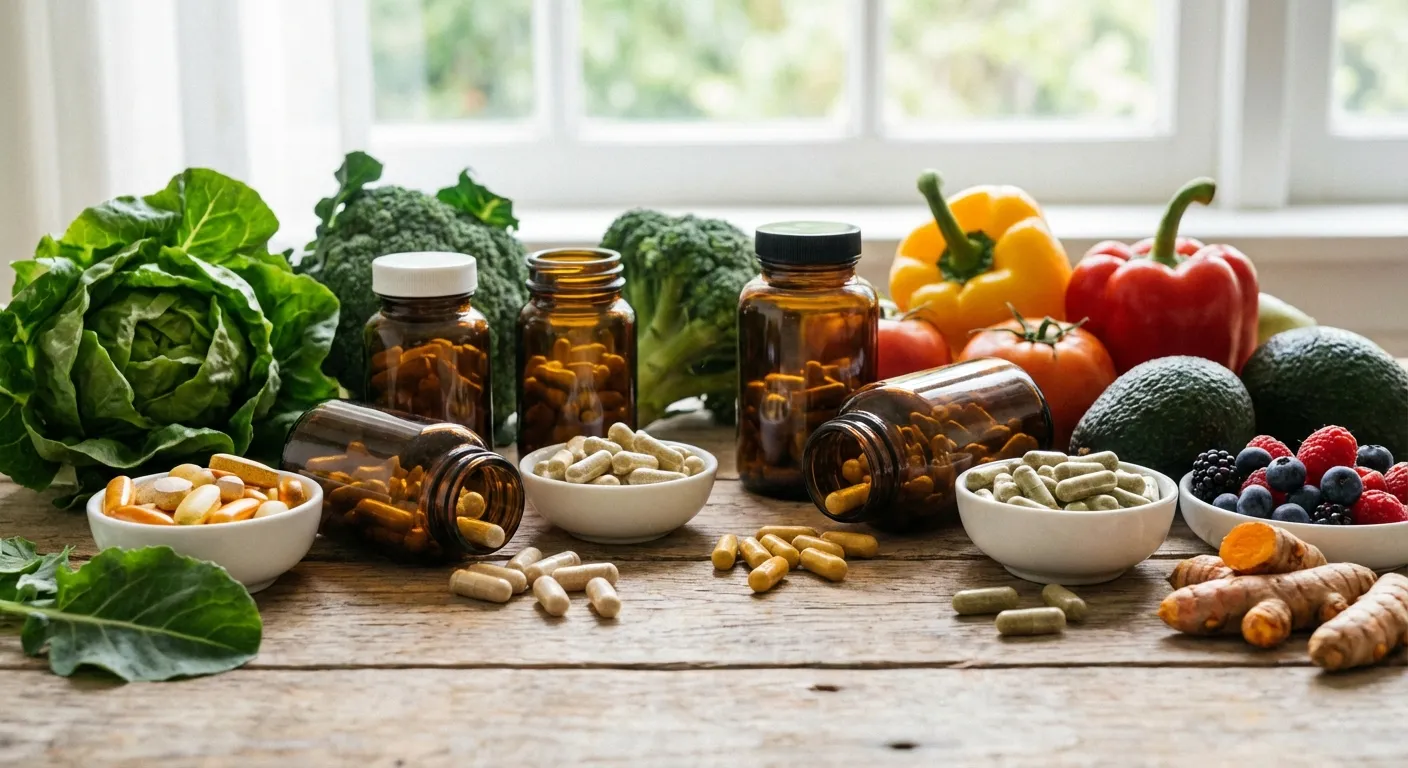
If you're wondering whether pills can add to what DASH gets from food, our guide to supplements that lower blood pressure looks at the evidence for each one.
Track Your Results
The only way to know if DASH is working for you is to measure your blood pressure regularly. Take readings at the same time each day (morning is ideal) using a consistent measurement technique.
Record your baseline for one week before starting, then log your readings daily as you follow the plan. Cardilog makes this easy. It automatically charts your trends and the AI health assistant can help you identify patterns. For example, you might notice your readings drop more on days when you hit your vegetable target versus days when you eat out.
You can also download a printable blood pressure log to keep beside your kitchen table as a visual reminder to track while you eat.
The 2-Week Test
Who Should Follow the DASH Diet?
The DASH diet is safe and beneficial for almost everyone, not just people with high blood pressure. It is particularly recommended for:
- Anyone with hypertension (readings above 130/80 mmHg)
- People with prehypertension or elevated blood pressure who want to prevent it from getting worse
- Those with a family history of high blood pressure or heart disease
- People who want to reduce their reliance on blood pressure medication (always consult your doctor first)
- Anyone looking for a balanced, sustainable, whole-food diet
If you also want to lose weight, our guide to blood pressure and weight loss explains how your weight affects your readings.
If you are unsure where your readings fall, our guides to blood pressure by age and blood pressure for women can help you understand your personal targets.
Talk to Your Doctor
The Bottom Line
The DASH diet is not a fad. It is the most well-studied dietary intervention for blood pressure, backed by decades of clinical research and recommended by the NHLBI, which developed it. It works by flooding your body with the nutrients that naturally lower blood pressure while cutting the sodium and processed foods that raise it.
Start this week. Use the 7-day meal plan above, grab the shopping list, and commit to two weeks. Track your blood pressure with Cardilog to see the results for yourself. If you also want to manage stress and the white coat effect, those are great next steps alongside your new eating plan.