

If you are starting Mounjaro or Zepbound, you have probably heard that these medications do more than help you lose weight — and one of the most talked-about effects is what they do to blood pressure. The short answer: tirzepatide, the drug inside both Mounjaro and Zepbound, lowers blood pressure, and by more than semaglutide (Ozempic and Wegovy) does. But there is an important flip side involving your heart rate and your existing blood pressure medication that most articles skip. Here is what the 2026 evidence actually shows.
Do Mounjaro and Zepbound lower blood pressure?
Yes. The clearest evidence comes from the SURMOUNT-1 ambulatory blood pressure monitoring substudy, published by de Lemos and colleagues in the journal Hypertension in 2024. It used 24-hour ambulatory monitoring — a blood pressure cuff worn around the clock, which is more accurate than a single clinic reading — in 600 people with obesity but without type 2 diabetes. After 36 weeks, every dose of tirzepatide lowered 24-hour systolic blood pressure compared with placebo.
Notably, the people in this substudy already had reasonably controlled blood pressure at entry (below 140/90 mmHg, whether or not they were on BP medication), so tirzepatide lowered pressure even in people who were not badly hypertensive to start with. Nighttime blood pressure — which is a stronger predictor of cardiovascular death than daytime pressure — fell too.
How much? The numbers by dose
The blood pressure reduction was substantial and dose-related, though not in a perfectly straight line — the 10 mg dose produced the largest systolic drop. Here are the placebo-adjusted 24-hour changes at 36 weeks:
| Tirzepatide dose | Systolic BP change vs placebo | Diastolic BP change vs placebo | Heart-rate change vs placebo |
|---|---|---|---|
| 5 mg weekly | -7.4 mmHg | -2.0 mmHg | +2.1 bpm |
| 10 mg weekly | -10.6 mmHg | -2.9 mmHg | +2.3 bpm |
| 15 mg weekly | -8.0 mmHg | -0.5 mmHg (not significant) | +5.4 bpm |
Source: SURMOUNT-1 ambulatory blood pressure substudy, 24-hour readings at week 36. The systolic reduction of roughly 7 to 11 mmHg is clinically meaningful — at a population level, a drop of this size is associated with a real reduction in stroke and heart-attack risk. The diastolic effect was smaller, and at the 15 mg dose the diastolic change was not statistically significant.
Ambulatory vs clinic readings
Mounjaro vs Zepbound: same drug, two labels
A common source of confusion: Mounjaro and Zepbound are the same medication, tirzepatide, made by the same manufacturer. The only difference is what each brand is FDA-approved to treat, which affects insurance coverage more than biology. When it comes to blood pressure, they behave identically.
| Feature | Mounjaro | Zepbound |
|---|---|---|
| Active ingredient | Tirzepatide | Tirzepatide (identical) |
| FDA-approved for | Type 2 diabetes | Chronic weight management (obesity) |
| Dose range | 2.5-15 mg weekly | 2.5-15 mg weekly |
| How it works | Dual GIP + GLP-1 receptor agonist | Same dual mechanism |
| Effect on blood pressure | Lowers it | Lowers it (identically) |
So if you read that “Zepbound lowers blood pressure” or “Mounjaro lowers blood pressure,” both statements describe the same tirzepatide effect. The dose you are on matters far more than which brand name is on the box.
Tirzepatide vs Ozempic and Wegovy: which lowers blood pressure more?
Tirzepatide is a dual agonist, meaning it works on two gut-hormone signals (GIP and GLP-1), while semaglutide (the drug in Ozempic and Wegovy) activates GLP-1 alone. That extra mechanism translates into more weight loss, and because weight loss is the biggest driver of the blood pressure benefit, tirzepatide tends to lower blood pressure more.
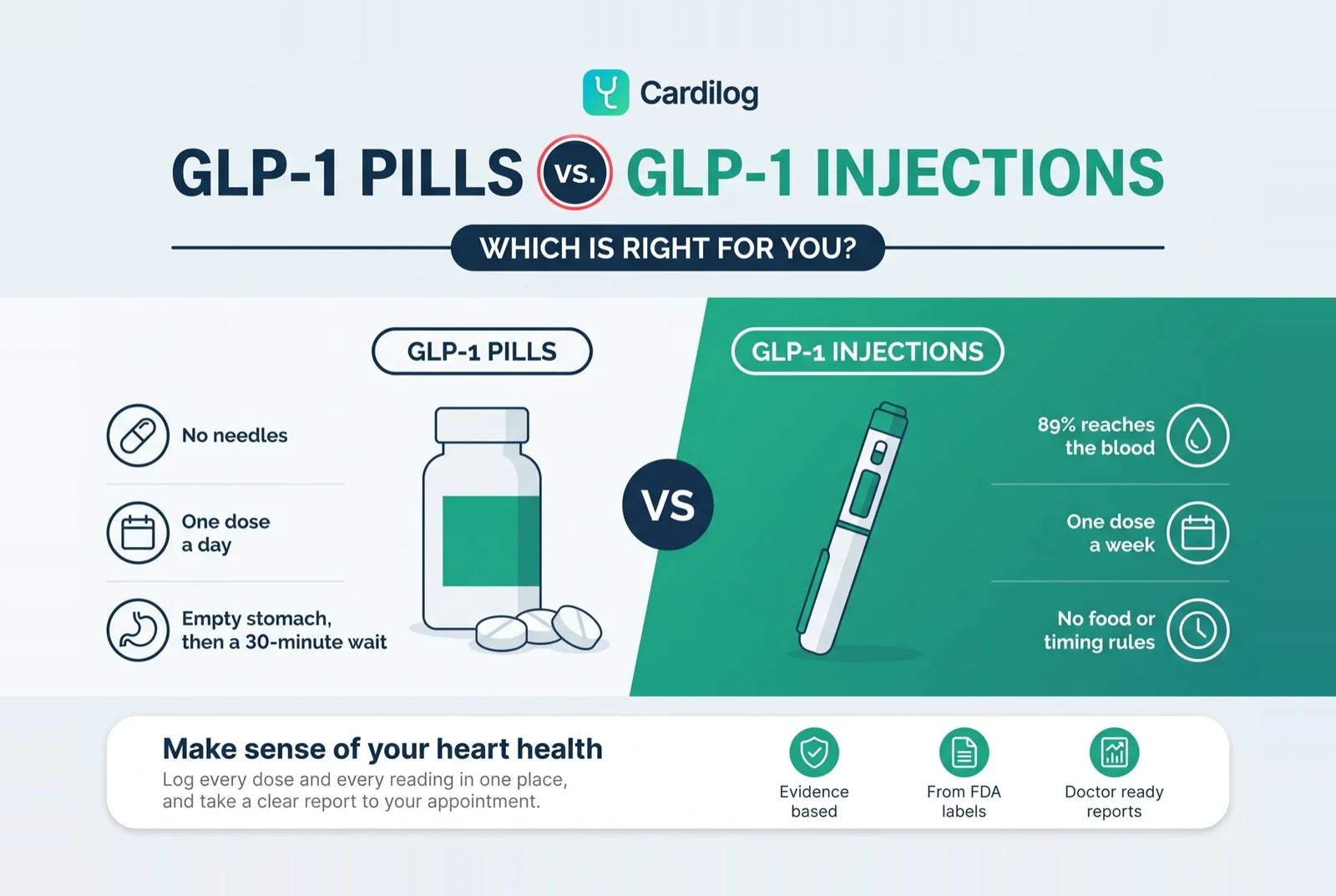
One practical difference is that tirzepatide has no tablet form, so Mounjaro and Zepbound are weekly injections only. Semaglutide is available both ways, and if that is the choice in front of you we compared the GLP-1 pill against the injection on absorption, weight loss, side effects and cost.
| Medication | Active ingredient | Average weight loss | Systolic BP reduction |
|---|---|---|---|
| Ozempic | Semaglutide (GLP-1) | ~6-8% | ~3-4 mmHg (office) |
| Wegovy | Semaglutide (GLP-1) | ~10-15% | ~4-5 mmHg (office) |
| Mounjaro / Zepbound | Tirzepatide (GIP + GLP-1) | ~15-21% | ~7-11 mmHg (24-hour) |
The head-to-head SURMOUNT-5 trial, published in 2025, settled the weight-loss question directly: tirzepatide produced about 20% weight loss versus about 14% for semaglutide over 72 weeks. Since roughly 70% of tirzepatide's blood pressure effect tracks with weight loss (more on that next), greater weight loss largely explains the greater blood pressure reduction.
Reading the comparison fairly
Why tirzepatide lowers blood pressure
Most of the benefit comes from weight loss. A classic meta-analysis by Neter and colleagues found that blood pressure falls by roughly 1 mmHg systolic for every kilogram of weight lost. Given the 15-21% body-weight reductions tirzepatide can produce, a meaningful blood pressure drop is expected on weight loss alone.
But it is not only weight loss. When the SURMOUNT-1 researchers separated out how much weight each person lost, weight change explained about 70% of the systolic drop — leaving roughly 30% coming from other effects. These weight-independent effects are thought to include:
- Improved blood-vessel function: better function of the endothelium (the lining of your arteries), which helps vessels relax.
- Sodium excretion (natriuresis): the kidneys release more sodium, reducing blood volume and pressure.
- Reduced inflammation and better insulin sensitivity: both are linked to lower vascular resistance over time.
The practical upshot: your blood pressure may start improving before you have lost a large amount of weight, and it will generally keep improving as the weight comes off. You can read more about the underlying link in our guide to blood pressure and weight loss.
The catch: tirzepatide can raise your heart rate
Here is the part that surprises people. Even as it lowers blood pressure, tirzepatide slightly increases resting heart rate. In the 24-hour substudy, heart rate rose by about 2 beats per minute at 5-10 mg and about 5 beats per minute at 15 mg compared with placebo. The larger SURMOUNT-1 trial also recorded a small rise in resting pulse, of a few beats per minute.
A modest resting heart-rate increase is a known, expected effect of the entire GLP-1 and dual GIP/GLP-1 class, and for most people it is minor and not dangerous. It does, however, mean that “blood pressure down, heart rate up” is the normal pattern on these drugs — so do not be alarmed if your home monitor shows a slightly higher pulse. If you develop a persistently fast heart rate, palpitations, or chest symptoms, contact your doctor.
Can tirzepatide make your blood pressure too low?
This is the risk that matters most in real life, and it is the one the studies' headline numbers do not capture. Tirzepatide on its own rarely causes dangerously low blood pressure. The problem arises when its blood-pressure-lowering effect stacks on top of the blood pressure medication you were already taking. As you lose weight and your baseline pressure falls, a medication dose that was right for you six months ago can suddenly be too strong.
Signs your blood pressure may be dropping too low — hypotension — include:
- Dizziness or lightheadedness, especially when standing up
- Feeling faint, or actually fainting
- Unusual fatigue or weakness
- Blurred vision
- Nausea (which can also worsen from the medication itself and cause dehydration)
Dehydration from tirzepatide's gastrointestinal side effects (nausea, vomiting, diarrhea) can make hypotension worse, so staying hydrated matters. If you notice these symptoms, do not stop your blood pressure medication on your own — contact your doctor, who can adjust it safely.
Can you take Mounjaro or Zepbound with blood pressure medication?
Yes. There is no direct clash between the drugs, and starting tirzepatide while you are already on blood pressure medication is routine — in the SURMOUNT-1 substudy, people on steady blood pressure medication were specifically included, and the blood pressure benefit held regardless of whether people were already treated. The issue is not safety of the combination; it is that the combination often becomes too effective.
Many people on tirzepatide eventually have one or more blood pressure medications reduced or stopped as they lose weight — a good problem to have, but only when done deliberately with your doctor. The way to manage it well is to bring objective data to those appointments instead of guessing.
Bring readings, not guesses
How to monitor your blood pressure at home on tirzepatide
Because tirzepatide lowers blood pressure gradually and can interact with your existing medication, home monitoring is the single most useful habit while you are on Mounjaro or Zepbound. A simple routine:
- Measure a few times a week, at the same times of day (morning before medication and evening are ideal), using a validated upper-arm cuff.
- Log every reading so you can see the trend over weeks, not just isolated numbers. A steady decline is the signal that your BP medication may need review.
- Check more often during dose increases, since each step up in tirzepatide can deepen the blood pressure effect.
- Note symptoms alongside readings — dizziness or lightheadedness plus a low number is a prompt to call your doctor.
If you are new to home measurement, our guides on taking accurate blood pressure readings and reading a blood pressure chart will help you interpret what you see. And if you would like a hand choosing a monitor or setting up your tracking, the Cardilog team is happy to give you a personal recommendation — just email us at info@cardilog.app.
When to see a doctor
Contact your healthcare provider if, while taking Mounjaro or Zepbound, you:
- Feel dizzy, lightheaded, or faint — especially when standing — which may signal your BP is too low
- See home readings consistently below about 90/60 mmHg, or a sudden drop from your usual range
- Develop a persistently fast or pounding heartbeat, palpitations, or chest discomfort
- Are on blood pressure medication and your readings keep trending down (your doses may need adjusting)
- Have severe or persistent nausea, vomiting, or diarrhea that could cause dehydration
Never start, stop, or change the dose of a blood pressure medication on your own. Weight loss and blood pressure changes on tirzepatide are best managed as a planned, monitored process with your prescriber.
The bottom line
Mounjaro and Zepbound — both tirzepatide — genuinely lower blood pressure, cutting 24-hour systolic pressure by roughly 7 to 11 mmHg in clinical trials, more than semaglutide. About 70% of that benefit comes from weight loss, with the rest from effects on your blood vessels and kidneys. The trade-off is a small rise in resting heart rate, and the real-world watch-point is blood pressure falling too low when the drug is combined with existing BP medication.
None of this makes tirzepatide a blood pressure drug — it is not approved to treat hypertension. But if you are on it, the blood pressure improvement is a meaningful bonus, and tracking your numbers at home is how you turn that bonus into a safe, doctor-guided reduction in the medications you no longer need.