

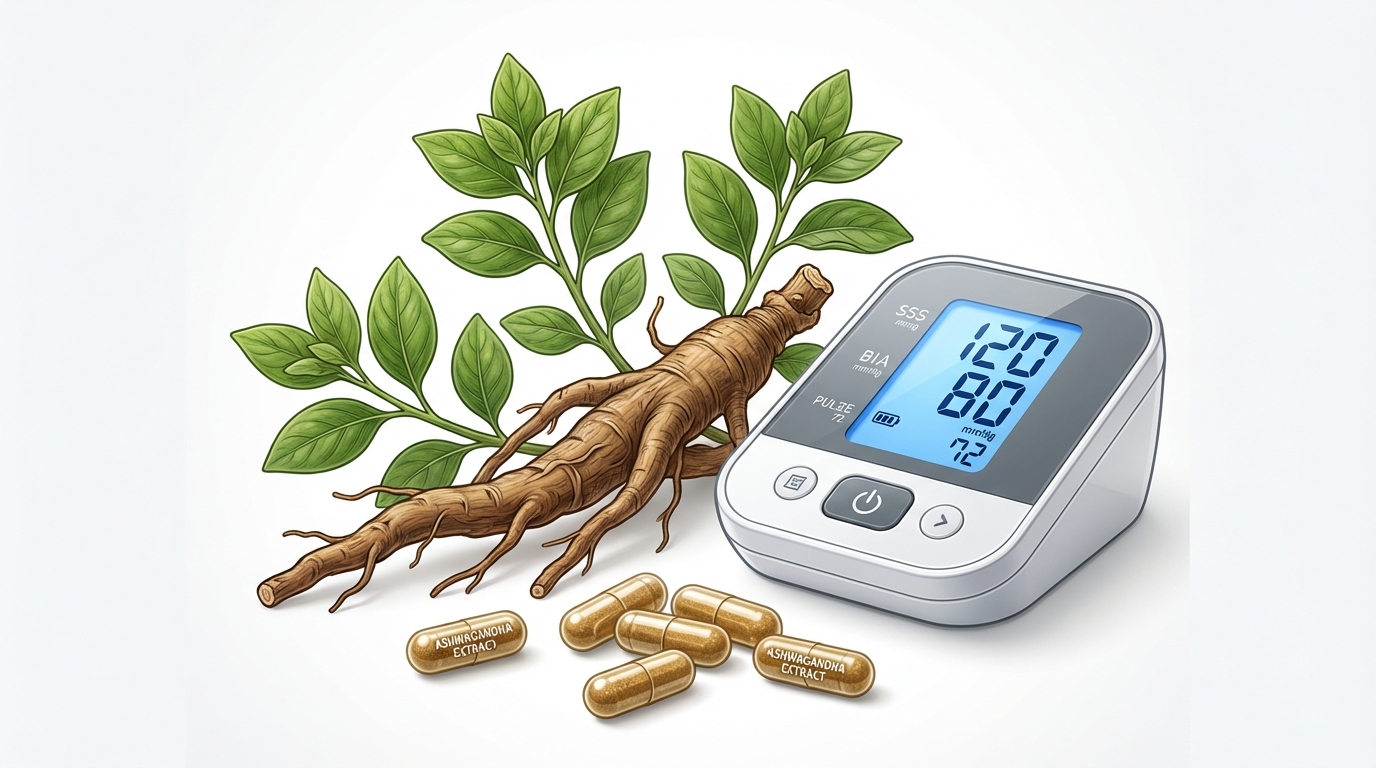
Does ashwagandha actually lower blood pressure?
Ashwagandha (Withania somnifera) is a traditional adaptogenic herb used in Ayurvedic medicine for stress, energy, and vitality. Over the past decade, clinical research has investigated whether ashwagandha can lower blood pressure. The evidence is cautiously positive but modest.
A 2012 study published in the Indian Journal of Psychological Medicine examined 51 adults with stress-related hypertension. Participants taking ashwagandha root powder showed average systolic blood pressure reductions of approximately 5 mmHg and diastolic reductions of about 3 mmHg after 60 days. The effect was statistically significant but not clinically dramatic.
More recent research published in 2024 reviewed cardiovascular effects across multiple trials. Results were mixed. Some studies reported modest blood pressure improvements, while others showed no significant changes. The key variable appears to be baseline stress and cortisol levels. People with elevated stress hormones experienced greater blood pressure reductions from ashwagandha compared to those with normal cortisol.
Ashwagandha is not a replacement for medication
How ashwagandha affects blood pressure
Ashwagandha does not directly act on blood vessels or the heart in the way that beta-blockers or ACE inhibitors do. Instead, it influences blood pressure through several indirect mechanisms tied to stress physiology.
Cortisol reduction
The most well-documented effect of ashwagandha is cortisol reduction. A 2012 double-blind, placebo-controlled trial published in Indian Journal of Psychological Medicine found that participants taking KSM-66 ashwagandha extract experienced a 27.9% reduction in serum cortisol levels after 60 days, compared to minimal changes in the placebo group.
Chronic cortisol elevation contributes to hypertension by increasing sympathetic nervous system activity, promoting sodium retention, and enhancing blood vessel sensitivity to vasoconstrictors. By lowering cortisol, ashwagandha reduces these downstream effects, which can lead to modest blood pressure improvements.
Vasodilation and RAAS modulation
Withanolides (the active compounds in ashwagandha) may promote vasodilation by modulating the renin-angiotensin-aldosterone system (RAAS). RAAS is a hormonal cascade that regulates blood pressure through sodium balance and blood vessel constriction. Some preclinical research suggests ashwagandha extracts reduce peripheral vascular resistance, but human data supporting this mechanism is limited.
Inflammation and oxidative stress
Chronic low-grade inflammation and oxidative stress contribute to endothelial dysfunction, a precursor to hypertension. Ashwagandha has demonstrated anti-inflammatory and antioxidant effects in multiple studies. A 2024 review in PMC highlighted ashwagandha's effects on vascular endothelium, lipid metabolism, and inflammatory markers, all of which influence cardiovascular health.
Track your cortisol-BP connection
KSM-66 vs Sensoril: which ashwagandha extract is better?
Not all ashwagandha supplements are the same. Two proprietary extracts dominate the clinical research and supplement market: KSM-66 and Sensoril. Both are standardized for withanolide content, but they differ in extraction method, plant parts used, and clinical focus.
| Feature | KSM-66 | Sensoril |
|---|---|---|
| Plant part | Root only | Roots and leaves |
| Extraction method | Aqueous extraction (no alcohol) | Hydroalcoholic extraction |
| Withanolide content | 5% minimum | Up to 10% (higher withaferin A) |
| Primary focus | Stress reduction, cortisol lowering, athletic performance | Anxiety, sleep, cognitive health |
| Typical dose | 300-600 mg/day | 125-500 mg/day |
| Clinical trials | 24+ published studies | 12+ published studies |
KSM-66 has the most research on cortisol reduction and physical performance. If your blood pressure is primarily stress-related, KSM-66 is the better-studied option. It is a full-spectrum extract that preserves the natural balance of compounds found in the root.
Sensoril includes leaf material, which increases withaferin A content. Some research suggests withaferin A has stronger anti-inflammatory effects. Sensoril is often marketed for sleep support and anxiety, which can indirectly support blood pressure if sleep quality or anxiety are contributing factors.
For blood pressure management linked to stress, KSM-66 is the more direct choice. For blood pressure tied to poor sleep or anxiety, Sensoril may be worth considering. Both are safe at recommended doses.
Dosage and how to take ashwagandha
Clinical studies on ashwagandha and blood pressure typically use 300-600 mg per day of standardized root extract, divided into one or two doses. This dose range applies to both KSM-66 and Sensoril, though Sensoril is sometimes effective at slightly lower doses due to higher withanolide concentration.
- Start low: Begin with 300 mg daily for 1-2 weeks to assess tolerance. Some people experience mild gastrointestinal upset or drowsiness initially.
- Time of day: You can take ashwagandha in the morning or evening. Morning dosing may support daytime stress resilience. Evening dosing may promote better sleep, which can indirectly support blood pressure regulation.
- With or without food: Ashwagandha can be taken with or without food. If you experience stomach upset, take it with a meal.
- Consistency matters: Ashwagandha is not a fast-acting supplement. Benefits accumulate over weeks. Take it daily for at least 8-12 weeks before evaluating effectiveness.
Monitor your blood pressure
Interactions with blood pressure medications
Ashwagandha has mild blood pressure-lowering effects. If you take blood pressure medication, combining them can produce additive effects, potentially causing hypotension (blood pressure that is too low). This interaction is most concerning with:
- ACE inhibitors: Lisinopril, enalapril, ramipril. These drugs lower blood pressure by blocking angiotensin II. Ashwagandha may enhance their effect.
- Beta-blockers: Metoprolol, atenolol, carvedilol. These slow the heart rate and reduce cardiac output. Adding ashwagandha may lower blood pressure further.
- Calcium channel blockers: Amlodipine, diltiazem, verapamil. These relax blood vessels. Ashwagandha can compound the vasodilatory effect.
- Diuretics: Hydrochlorothiazide, furosemide. These remove fluid to lower blood pressure. Ashwagandha may add to the reduction.
If you are on blood pressure medication and want to try ashwagandha, talk to your doctor first. You may need closer blood pressure monitoring or dose adjustments. Do not stop or reduce your medication without medical supervision.
Other medication interactions
Ashwagandha can interact with several other drug classes beyond blood pressure medications:
| Drug Class | Examples | Interaction Risk |
|---|---|---|
| Sedatives and CNS depressants | Benzodiazepines (lorazepam, diazepam), sleep aids (zolpidem) | Excessive drowsiness, respiratory depression |
| Immunosuppressants | Azathioprine, cyclosporine, tacrolimus | Ashwagandha may reduce effectiveness by boosting immune activity |
| Thyroid hormone medication | Levothyroxine | Ashwagandha may increase thyroid hormone levels, leading to hyperthyroidism |
| Diabetes medications | Insulin, metformin, sulfonylureas | Additive blood sugar lowering, risk of hypoglycemia |
Who should avoid ashwagandha
While ashwagandha is generally safe for healthy adults at recommended doses for up to 12 weeks, certain populations should avoid it:
- Pregnant and breastfeeding women: Ashwagandha has traditionally been used to induce miscarriage in high doses. It is not considered safe during pregnancy. Safety during breastfeeding is unknown.
- People with thyroid disorders: Ashwagandha can increase thyroid hormone levels. If you have hyperthyroidism or take thyroid medication, avoid ashwagandha or use it only under medical supervision.
- Autoimmune conditions: Ashwagandha may stimulate immune activity, which could worsen autoimmune diseases like rheumatoid arthritis, lupus, or multiple sclerosis.
- People scheduled for surgery: Ashwagandha may interact with anesthesia and sedatives. Discontinue use at least two weeks before scheduled surgery.
- People with low blood pressure: If your blood pressure is already below 90/60 mmHg, ashwagandha could drop it further, causing dizziness and fainting.
Side effects and safety
At standard doses (300-600 mg daily), ashwagandha is well-tolerated by most people. A 2025 safety study published in Phytotherapy Research followed 120 healthy adults taking ashwagandha for 12 months. No significant adverse effects on liver, kidney, or thyroid function were observed.
Common mild side effects reported in clinical trials include:
- Mild gastrointestinal upset (nausea, diarrhea, stomach discomfort)
- Drowsiness or sedation (especially at higher doses)
- Headache
- Allergic reactions (rare, but possible with nightshade family herbs)
If you experience severe side effects such as jaundice, extreme fatigue, rapid heart rate, or signs of thyroid dysfunction (weight changes, temperature sensitivity), discontinue use and consult a healthcare provider immediately.
Supplements that work better than ashwagandha for blood pressure
Ashwagandha is a reasonable option for stress-related blood pressure elevation, but other supplements have stronger, more consistent evidence for blood pressure reduction:
| Supplement | Systolic BP Reduction | Diastolic BP Reduction | Evidence Level |
|---|---|---|---|
| Magnesium | 3-4 mmHg | 2-3 mmHg | Strong (multiple meta-analyses) |
| Potassium | 3-5 mmHg | 2-3 mmHg | Strong (large RCTs) |
| Beetroot juice (nitrate) | 4-10 mmHg | 2-5 mmHg | Strong (mechanistic + RCTs) |
| CoQ10 | 4-11 mmHg | 3-7 mmHg | Moderate (inconsistent results) |
| Berberine | 5-7 mmHg | 3-5 mmHg | Moderate (small trials) |
| Ashwagandha | 3-5 mmHg | 2-4 mmHg | Weak to moderate (mixed results) |
If your primary goal is blood pressure reduction, consider starting with magnesium, beetroot juice, or berberine. These have more robust clinical evidence. Ashwagandha works better as an adjunct when stress or cortisol are primary drivers.
The bottom line on ashwagandha and blood pressure
Ashwagandha may lower blood pressure modestly (3-5 mmHg systolic, 2-4 mmHg diastolic) in people with elevated stress and cortisol. The effect works through cortisol reduction, improved stress resilience, and possible vasodilation. Clinical evidence is mixed but cautiously positive.
Ashwagandha is not a replacement for blood pressure medication. It is best viewed as a complementary tool for people whose hypertension is linked to chronic stress. If you decide to try it, choose a standardized extract like KSM-66 or Sensoril, start with 300 mg daily, and track your blood pressure regularly using a blood pressure log.
If you take blood pressure medication, have thyroid conditions, or are pregnant, consult your doctor before using ashwagandha. For most people, the supplement is safe and well-tolerated at recommended doses for up to 12 weeks.
For more comprehensive approaches to lowering blood pressure, explore foods that lower blood pressure, exercises proven to work, and other evidence-based supplements.