
The science: how beetroot juice lowers blood pressure
Beetroot juice works through a well-researched mechanism: the nitrate-nitrite-nitric oxide pathway. Here is how it works step by step.
Beets contain high levels of inorganic nitrate (NO₃). When you drink beetroot juice, nitrate gets absorbed in your digestive tract. About 25% of that nitrate is actively secreted back into your saliva. Bacteria on your tongue convert nitrate to nitrite (NO₂). You then swallow this nitrite-enriched saliva.
In your stomach, blood, and tissues, nitrite converts to nitric oxide (NO), especially in areas with low oxygen or acidic pH. Nitric oxide signals the smooth muscle cells in blood vessel walls to relax. When blood vessels dilate, resistance drops and blood pressure falls.
This pathway is separate from the body's usual nitric oxide production method (the L-arginine pathway). That means it provides a backup route for nitric oxide generation, which is particularly useful in conditions like hypertension where traditional nitric oxide production may be impaired.
Why this matters for blood pressure
What the clinical trials show
Over the past 15 years, dozens of randomized controlled trials have tested beetroot juice in people with normal and elevated blood pressure. The results are consistent.
| Study | Participants | Dose | Result | Duration |
|---|---|---|---|---|
| 2024 Meta-analysis (11 trials) | 349 hypertensive adults | 400 mg nitrate/day | -5.3 mmHg systolic | Up to 90 days |
| 2024 ADPKD Trial | Hypertensive adults with kidney disease | 400 mg nitrate/day (4 weeks) | -9.0 mmHg systolic vs placebo | 4 weeks |
| 2022 Meta-analysis (22 trials) | 650 intervention, 598 control | Variable (2h to 15 days) | -4.4 mmHg systolic | Acute to 2 weeks |
| 2025 Older Adults Study | Older adults (55+ years) | 400 mg nitrate/day | Significant reduction in 2 weeks | 2 weeks |
| 2013 Systematic Review | Various healthy adults | ~250 ml beetroot juice | -4.4 mmHg systolic, -1.1 mmHg diastolic | Acute (2h-15d) |
The magnitude of blood pressure reduction varies across studies, but the average effect is a 4-10 mmHg drop in systolic pressure. This is clinically meaningful. A sustained 5 mmHg reduction in systolic blood pressure is associated with a 10% reduction in cardiovascular disease risk and a 7% reduction in all-cause mortality.
The effect is stronger in people who start with higher blood pressure. One meta-analysis found beetroot juice reduced systolic pressure by 8.1 mmHg in hypertensive individuals versus 3.5 mmHg in normotensive people.
How long until it works
You do not have to wait weeks to see results. Blood pressure starts dropping within 2-3 hours after drinking beetroot juice, with the maximum effect at around 3 hours. The reduction persists for 10-24 hours, depending on the dose and individual metabolism.
With daily consumption, the benefits accumulate. Studies show blood pressure reductions are sustained over 4-12 weeks of daily intake. A 2024 study in older adults found measurable improvements in just 2 weeks. The effect fades if you stop drinking beetroot juice, but resumes when you restart.
Dosage and timing
Most clinical trials use 250 ml (about 1 cup) of beetroot juice or a 70 ml concentrated shot containing 400-500 mg of nitrate. This is the dose that reliably produces blood pressure reductions in studies.
Commercially available beetroot juices vary widely in nitrate content. Look for products that list nitrate content on the label. A typical serving should provide at least 200-300 mg of nitrate to be effective.
| Product Type | Typical Nitrate Content | Pros | Cons |
|---|---|---|---|
| Fresh beetroot juice (250 ml) | 200-300 mg | Whole food, retains all nutrients, fiber if blended | Earthy taste, short shelf life, preparation time |
| Concentrated beetroot shot (70 ml) | 400-500 mg | High nitrate dose, convenient, longer shelf life | Expensive, concentrated sugar, intense taste |
| Beetroot juice powder | 5-173 mg per serving (variable) | Long shelf life, easy to mix, portable | Often too low-dose to be effective, processing may reduce bioactives |
| Beetroot capsules | <10 mg per typical dose | No taste, convenient | Extremely low nitrate content, unlikely to be effective for blood pressure |
Check the label
Best time to drink beetroot juice
Blood pressure typically peaks in the morning and early afternoon. A 2024 study found that beetroot supplements taken in the morning lowered systolic blood pressure by 3 mmHg, compared to 2 mmHg for an evening dose. The difference is modest, but it suggests morning intake may provide better coverage during the hours when blood pressure is naturally higher.
That said, consistency matters more than timing. If you prefer drinking beetroot juice in the evening and it helps you stick with the habit, do that. The key is daily intake over weeks and months.
Beetroot juice versus other nitrate-rich foods
Beets are not the only source of dietary nitrate. Many leafy greens and vegetables contain even more nitrate per 100 grams.
| Food | Nitrate Content (mg per 100g) | Serving Size to Match 400 mg Nitrate |
|---|---|---|
| Arugula (rocket) | 480 mg | ~85g (about 3 cups raw) |
| Spinach | 250 mg | ~160g (about 5 cups raw, 1.5 cups cooked) |
| Celery | 250 mg | ~160g (about 4 stalks) |
| Lettuce (butterhead) | 200 mg | ~200g (about 7 cups) |
| Beetroot (raw) | 110 mg | ~360g (about 2 medium beets) |
| Radishes | 100 mg | ~400g (about 3 cups sliced) |
Arugula and spinach are particularly high in nitrate. A large salad with arugula, spinach, and beets can easily provide 300-500 mg of nitrate, matching the dose in beetroot juice. The advantage of whole vegetables is that you also get fiber, vitamins, minerals, and other phytonutrients without concentrated sugar.
If you do not like beetroot juice, eating a variety of nitrate-rich vegetables daily is an effective alternative. Just make sure to include these foods regularly, as the blood pressure benefit depends on consistent nitrate intake.
Boost absorption
Who should avoid beetroot juice
Beetroot juice is safe for most people, but there are some groups who should limit or avoid it:
- People with kidney stones or chronic kidney disease: Beets are high in oxalates, which can bind with calcium to form calcium oxalate kidney stones. If you have a history of kidney stones, especially calcium oxalate stones, limit beetroot juice intake and consult your doctor.
- People on blood pressure medication: Combining beetroot juice with antihypertensive drugs may lower blood pressure too much, causing dizziness, lightheadedness, or fainting. If you take blood pressure medication, monitor your readings closely and discuss beetroot juice with your doctor before starting.
- People taking nitrate medications: Some heart medications (nitroglycerin, isosorbide) work through nitric oxide pathways. Combining these with high-dose beetroot juice may cause excessive vasodilation. Do not use beetroot juice if you take PDE5 inhibitors (sildenafil, tadalafil) for the same reason.
- People with low blood pressure: If your baseline blood pressure is already low (below 90/60 mmHg), beetroot juice may drop it further and cause symptoms. Check with your doctor first.
Side effects and considerations
Common side effects of beetroot juice are mild and harmless:
- Beeturia: Pink or red urine after consuming beets. This is harmless and caused by betalain pigments. It affects about 10-14% of people and is more common in people with low stomach acid or iron deficiency.
- Digestive upset: Some people experience mild stomach discomfort, bloating, or diarrhea, especially with concentrated shots. Start with a smaller dose and increase gradually.
- Sugar content: Beetroot juice contains natural sugars. A 250 ml serving has about 20-25 grams of sugar. If you have diabetes or are watching carbohydrate intake, account for this and monitor blood glucose.
Does beetroot juice work as well as medication?
A 4-10 mmHg reduction in systolic blood pressure is meaningful, but it is not a replacement for medication if you have hypertension requiring drug therapy. For context, first-line blood pressure medications (ACE inhibitors, ARBs, thiazide diuretics) typically lower systolic pressure by 10-15 mmHg at standard doses.
Beetroot juice is best viewed as a complementary strategy, not a substitute. It works well alongside exercise, dietary changes, and medication to provide an additional 4-5 mmHg reduction. For people with borderline hypertension or prehypertension, it may be enough to avoid medication or delay the need for it.
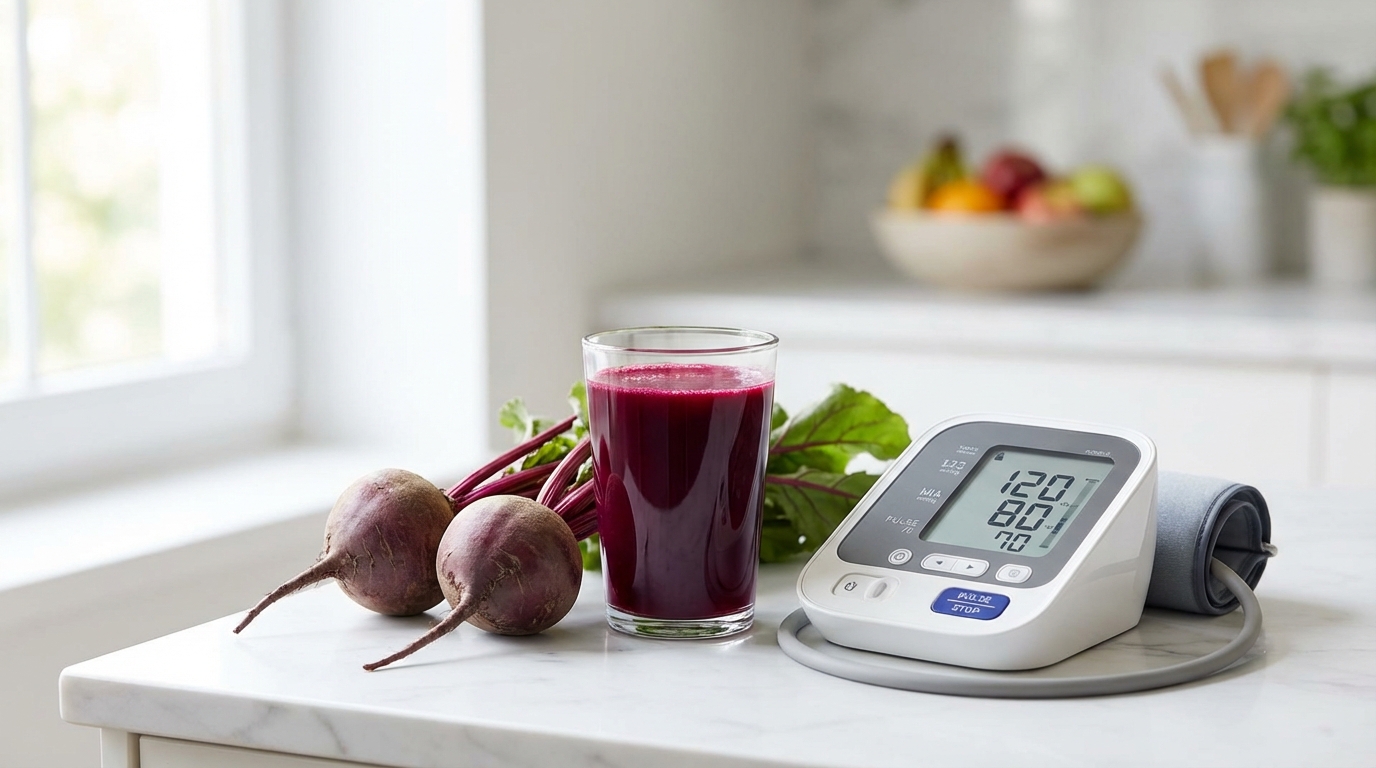
Track your response with a blood pressure tracker to see if beetroot juice makes a measurable difference for you. Individual responses vary based on baseline blood pressure, gut bacteria composition, and genetic factors.
Practical tips for using beetroot juice
- Start small: If you are new to beetroot juice, start with 100-150 ml per day to assess tolerance. Some people find the earthy taste off-putting at first. You can mix it with apple, carrot, or citrus juice to improve flavor.
- Choose nitrate-rich products: Look for beetroot juice that lists nitrate content on the label. Concentrated shots often provide 400-500 mg per serving, while regular juices may have 200-300 mg per cup.
- Avoid mouthwash: Antibacterial mouthwash kills the oral bacteria that convert nitrate to nitrite, reducing the effectiveness of beetroot juice by up to 50%. If you use mouthwash, wait at least 2 hours after drinking beetroot juice.
- Pair with vitamin C: Citrus fruits, bell peppers, and tomatoes contain vitamin C, which enhances nitrite-to-nitric-oxide conversion. Having these foods alongside or soon after beetroot juice may boost effectiveness.
- Monitor your blood pressure: Check your blood pressure before starting beetroot juice and then weekly for the first month to see if it is working for you. Use a validated home monitor and follow proper measurement technique.
The bottom line
Beetroot juice is one of the most well-researched dietary interventions for blood pressure. Clinical trials consistently show it lowers systolic blood pressure by 4-10 mmHg through dietary nitrate converting to nitric oxide, which relaxes blood vessels. The effect peaks 3 hours after consumption and lasts up to 24 hours.
A typical effective dose is 250 ml of beetroot juice or a concentrated shot providing 400-500 mg of nitrate per day. Beetroot juice contains significantly more nitrate than powders or capsules, making it the most reliable form. Other nitrate-rich foods like arugula, spinach, and celery can provide similar benefits.
Beetroot juice is not a replacement for medication if you have hypertension, but it is a useful complementary strategy. People with kidney stones, chronic kidney disease, or very low blood pressure should avoid it. If you take blood pressure medication, consult your doctor before starting to prevent excessive blood pressure drops.
For most people, adding a daily serving of beetroot juice or a large salad of nitrate-rich greens is a safe, evidence-backed way to support healthy blood pressure alongside balanced eating and regular physical activity.
For a complete overview of all evidence-based supplements for blood pressure, see our supplements to lower blood pressure guide.