
TL;DR
Why Beef Liver Supplements Are Trending
Organ meats were a dietary staple for most of human history. Your grandparents likely ate liver regularly. Somewhere along the way, modern diets dropped organ meats in favor of muscle cuts, processed foods, and synthetic multivitamins.
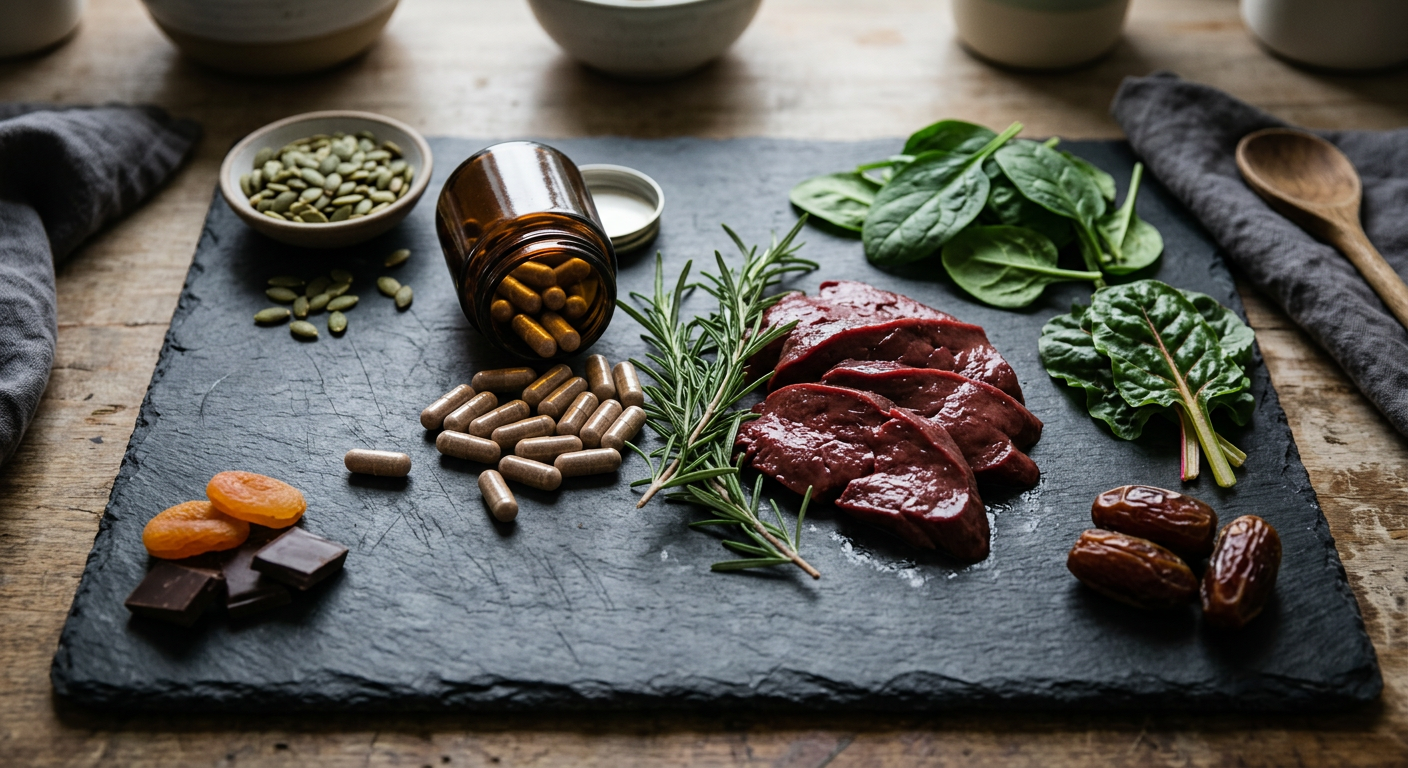
Now the wellness crowd is rediscovering what previous generations never forgot. Beef liver supplements are everywhere, mostly because liver is gram-for-gram more nutrient-packed than practically any other food. The catch is that most people find the taste genuinely awful. Capsules solve that problem.
What Is in Beef Liver?
A 3-ounce (85g) serving of cooked beef liver contains:
- Vitamin B12: 1,386% of daily value. Essential for red blood cell formation, nerve function, and homocysteine metabolism.
- Vitamin A (retinol): 731% of daily value. The active, bioavailable form. Supports immune function, vision, and cell growth.
- Copper: 1,588% of daily value. Critical for iron absorption, collagen production, and blood vessel integrity.
- Folate (B9): 54% of daily value. Works with B12 to regulate homocysteine, an amino acid linked to cardiovascular risk when elevated.
- Iron (heme): 36% of daily value. The highly absorbable form. Prevents iron-deficiency anemia, which forces the heart to work harder.
- Riboflavin (B2): 228% of daily value. Supports energy metabolism and antioxidant function.
- CoQ10: One of the highest natural food sources. Supports heart muscle energy production.
The Heart Health Connection
A few of the nutrients in beef liver are worth looking at specifically for heart health:
CoQ10 and Blood Pressure
CoQ10 (Coenzyme Q10) is found in high concentrations in heart muscle, where it helps mitochondria produce ATP (energy). As you age, CoQ10 levels decline, and statin medications further deplete them.
A meta-analysis in the Journal of Human Hypertension pulled together 12 clinical trials (362 patients total) and found CoQ10 supplementation reduced systolic blood pressure by an average of 11 mmHg and diastolic pressure by 7 mmHg. For context, some first-line blood pressure medications produce similar reductions.
While you can take CoQ10 as an isolated supplement, beef liver provides it alongside synergistic nutrients that support its absorption and function.
B12 and Folate: The Homocysteine Connection
Homocysteine is an amino acid that, when elevated, damages blood vessel walls and increases the risk of blood clots, heart attack, and stroke. Vitamins B12 and folate are the primary nutrients that convert homocysteine into harmless compounds.
Beef liver happens to be loaded with both B12 and folate at the same time. B12 deficiency is common after age 50 and in people taking acid-blocking medications. Correcting it usually brings homocysteine down noticeably.
Iron and Heart Function
Iron-deficiency anemia forces the heart to pump faster and harder to deliver adequate oxygen to tissues. Over time, this compensatory stress raises blood pressure and can lead to heart enlargement. The heme iron in beef liver is 2-3 times more absorbable than plant-based (non-heme) iron.
Iron Caution
How to Choose Quality Beef Liver Supplements
- Grass-fed, pasture-raised: Higher nutrient content and fewer contaminants than grain-fed.
- Desiccated (freeze-dried): Low-temperature drying preserves heat-sensitive nutrients like B12 and CoQ10. Avoid products processed at high temperatures.
- Third-party tested: Look for NSF, USP, or independent lab verification for purity and potency.
- No fillers or additives: The best products contain only desiccated liver and a capsule shell. Avoid products with flow agents, artificial colors, or unnecessary additives.
- Vitamin A disclosure: Quality brands list the vitamin A content per serving so you can track total intake and stay within safe limits.
Popular brands include Ancestral Supplements, Heart and Soil, and Paleovalley. Prices range from $30-50 for a month's supply.
Dosing and Safety
Recommended Dosage
- Most products recommend 3,000-4,500 mg per day (6-9 capsules)
- This equals roughly 1 ounce of fresh liver
- Start with half the dose for the first week to assess tolerance
- Take with meals for better absorption of fat-soluble vitamins
Potential Side Effects
- Vitamin A toxicity: Symptoms include headache, nausea, dizziness, blurred vision. Risk increases if you also take a vitamin A supplement or eat liver frequently. Upper safe limit for vitamin A is 10,000 IU per day.
- Iron overload: People with hemochromatosis should avoid beef liver supplements entirely.
- Digestive upset: Some people experience nausea or burping when starting. Taking with food usually resolves this.
- Gout risk: Liver is high in purines, which break down into uric acid. People prone to gout should use caution.
How to tell if they are working
Feelings are unreliable. Numbers are not. If you start beef liver supplements, measure before and after:
- Blood pressure: Track with a blood pressure log for 2 weeks before starting and continue for 8-12 weeks after.
- Blood work: Get baseline levels for B12, ferritin (iron stores), homocysteine, and a lipid panel. Retest after 12 weeks.
- Energy and fatigue: Keep a simple daily score. Iron and B12 improvements often show up as better energy within 2-4 weeks.
- Heart rate: Correcting anemia can lower resting heart rate over time as the heart no longer has to compensate.
Pro Tip
Worth it?
If you eat a varied diet and have no deficiencies, beef liver supplements probably won't change much. But if you are low on B12, iron, or CoQ10 (and a lot of people over 40 are), they fill those gaps more efficiently than most multivitamins. They are not a replacement for eating well or taking prescribed medication. Think of them as a concentrated food, not a drug.
For a complete overview of all evidence-based supplements for blood pressure, see our supplements to lower blood pressure guide.