Pair your smartwatch with Cardilog for real trend analytics.
Log readings from any device, spot patterns over weeks, and share doctor-ready trends in one tap.


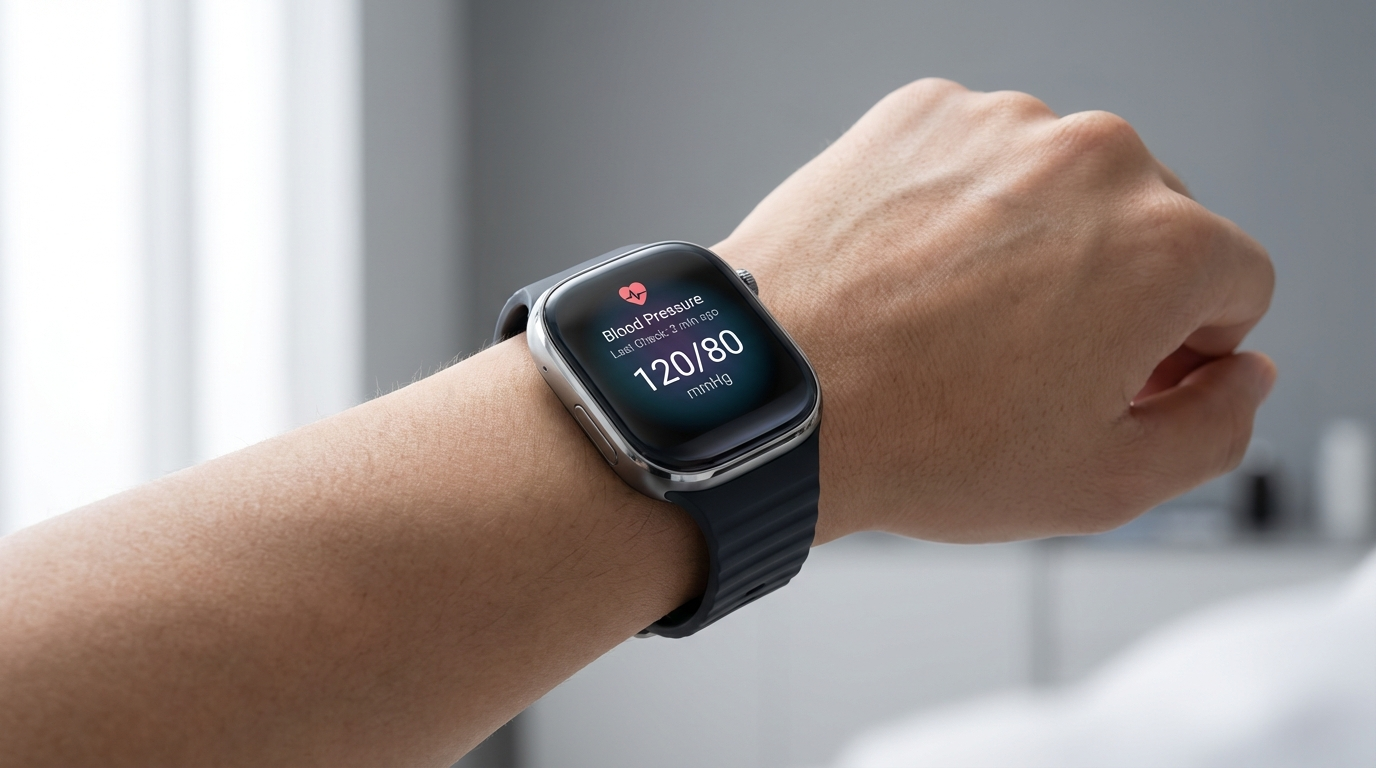
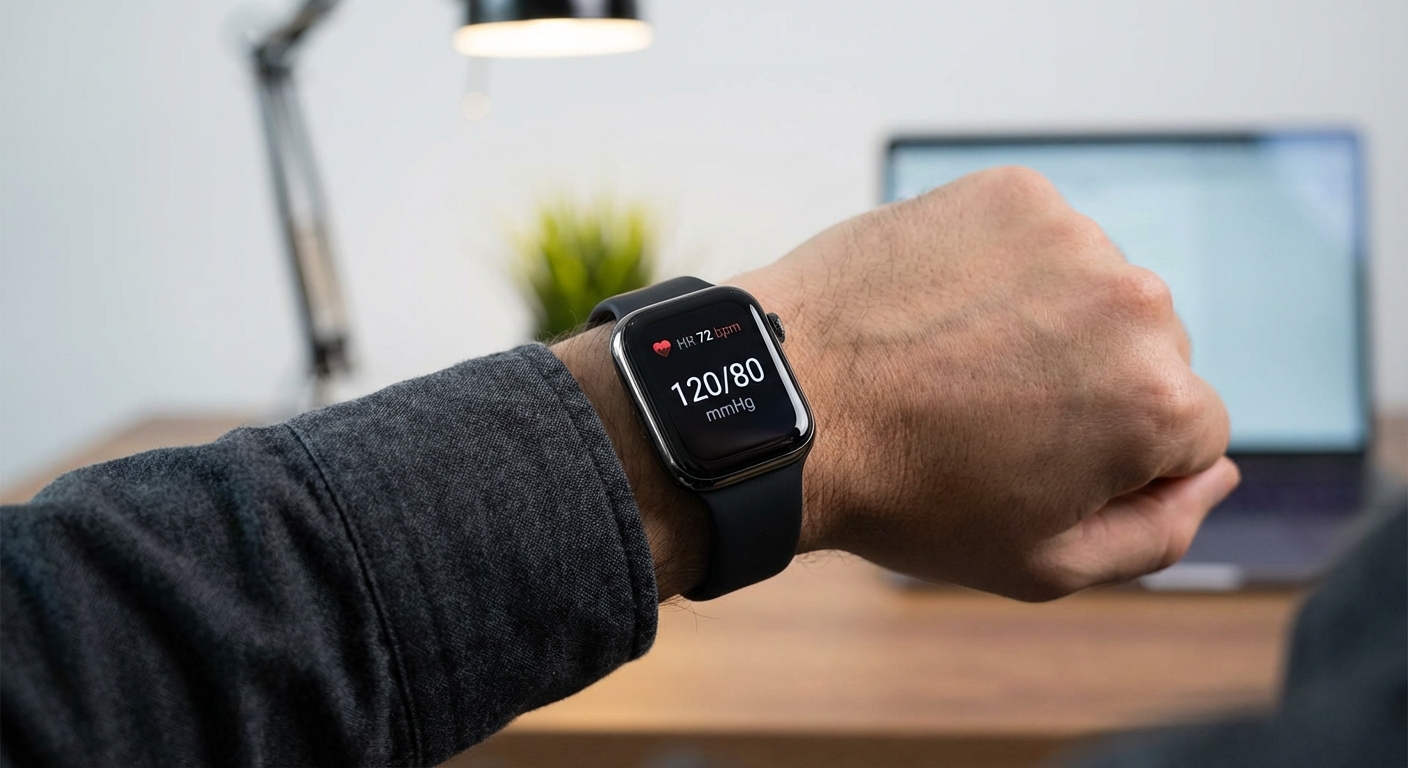
Smart watches with blood pressure monitoring have evolved from novelty gadgets to increasingly capable health trackers. In 2026, you can choose between PPG-based watches that estimate blood pressure from optical sensors, or cuff-based watches that use miniature inflatable bands similar to traditional monitors.
This guide compares the main options available in Australia, explains how each technology works, and helps you decide which approach fits your needs.
How Smart Watches Measure Blood Pressure
PPG (Photoplethysmography) Estimation
Most smartwatches, including the Samsung Galaxy Watch series, use PPG sensors, the same green LED lights that measure heart rate. These sensors detect changes in blood volume in the small arteries under your wrist.
The watch analyses characteristics like:
- Pulse transit time (PTT): How long it takes for a pulse wave to travel from your heart to your wrist
- Pulse wave velocity (PWV): How fast the pressure wave moves through your arteries
- Waveform morphology: The shape of the arterial pulse wave
These measurements correlate with blood pressure, but the relationship varies between individuals. That is why calibration is required, usually with a traditional arm cuff. The watch learns your personal relationship between PPG signals and actual blood pressure.
Why Calibration Matters
Oscillometric Measurement with Miniature Cuffs
Watches like the Huawei Watch D and Wellue BP Doctor take a different approach. They embed a tiny inflatable airbag inside the watch band that actually squeezes your wrist, just like a traditional blood pressure cuff.
This is the same oscillometric method used by arm cuffs:
- The cuff inflates to compress the artery
- It slowly deflates while sensors detect oscillations (pulsations)
- The watch calculates systolic and diastolic pressure from the oscillation patterns
Because this is direct measurement rather than estimation, it tends to be more accurate than PPG. However, it makes the watch bulkier, and you cannot take continuous readings throughout the day. Each measurement takes 30-60 seconds and requires you to hold your arm still.
Smart Watches with Blood Pressure Monitoring in 2026
Samsung Galaxy Watch 4, 5, 6, 7, and 8 (PPG-Based)
Samsung was one of the first mainstream brands to add blood pressure monitoring to their smartwatches. The feature is available on Galaxy Watch 4 and newer models through the Samsung Health Monitor app.
How it works:
- Uses PPG sensors to estimate blood pressure from pulse wave analysis
- Requires calibration with a traditional arm cuff every 28 days
- Available in Australia (unlike in some other regions)
- Readings take about 30 seconds
Accuracy: When freshly calibrated, Samsung watches can be within 5-10 mmHg of a traditional cuff for many users. However, user reports and clinical studies show accuracy degrades within 1-2 weeks. Some users find recalibrating every 7-14 days (not just the mandatory 28 days) improves reliability.
A 2024 study on the Galaxy Watch 8 in patients with Parkinson disease found reasonable correlation with traditional cuffs, but the watch tended to underestimate higher readings and overestimate lower ones.
Learn more in our detailed Samsung Galaxy Watch blood pressure guide.
Huawei Watch D and D2 (Cuff-Based)
The Huawei Watch D was released in 2022 and updated to the D2 in 2025. It stands out by including an actual miniature blood pressure cuff built into the watch band.
Key features:
- Oscillometric measurement using an inflatable butterfly airbag in the band
- 24-hour ambulatory blood pressure monitoring mode (takes readings automatically throughout the day)
- Blood pressure tracking during exercise
- No calibration required (but band sizing matters)
- Available in Australia through JB Hi-Fi and other retailers
Accuracy: Because it uses the same measurement method as a traditional monitor, the Huawei Watch D tends to be more accurate than PPG-based watches. Independent tests show 5-10 mmHg deviation from arm cuffs when the band is sized correctly.
The trade-off is bulk. The watch is noticeably thicker and heavier than a standard smartwatch, and the band is less flexible. Some users also report the automated inflation throughout the day can be uncomfortable or wake them at night.
Wellue and YHE BP Doctor Series (Cuff-Based)
The Wellue BP Doctor (also sold as YHE BP Doctor Pro or BP Doctor Fit in some markets) is another cuff-based option. Like the Huawei, it uses an inflatable airbag for oscillometric measurement.
Features:
- Built-in micro air cuff for pressure-based measurement (works on all skin tones)
- Blood oxygen and heart rate monitoring
- ECG capability on some models
- Generally more affordable than Huawei Watch D
- Starting price around $129-199 AUD
Accuracy: The YHE BP Doctor Fit has been praised in reviews for accuracy comparable to the Huawei Watch D. However, availability in Australia can be limited, and you may need to import the device.
Omron HeartGuide (Cuff-Based)
Omron, a trusted name in blood pressure monitors, released the HeartGuide smartwatch in 2019. It uses an inflatable cuff band and is clinically validated.
However, as of 2026, the HeartGuide is less commonly recommended because it is expensive (often $400+ AUD), bulky, and has limited smartwatch features compared to newer competitors. It is also harder to find in Australia.
Other Wearables: RingConn and Oura Ring
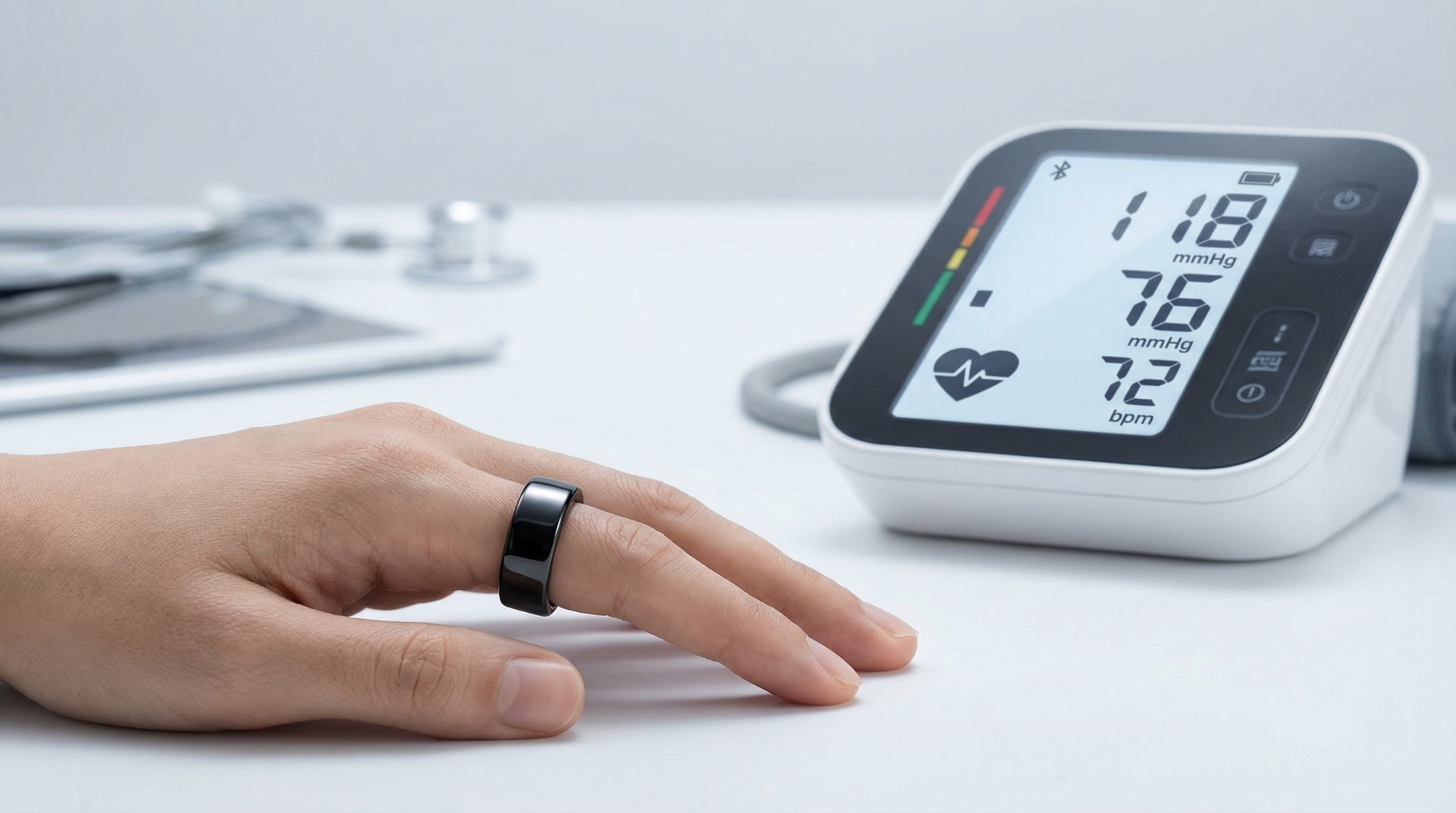
Smart rings like RingConn and Oura Ring are often marketed with blood pressure features. As of October 2026 neither gives you a reading in mmHg, and Oura's Blood Pressure Signals flags nighttime patterns instead.
They may offer blood pressure estimation based on heart rate variability and other indirect metrics, but these are even less accurate than smartwatch PPG methods. For actual blood pressure tracking, stick with watches that have dedicated BP features.
See our comprehensive wearable blood pressure monitors guide for more on rings, patches, and other devices.
Accuracy Comparison: What the Research Shows
Multiple studies have tested smartwatch blood pressure accuracy against traditional arm cuffs. Here is what we know:
| Device Type | Typical Deviation | Clinical Validation | Notes |
|---|---|---|---|
| Traditional arm cuff | ±3-5 mmHg | Gold standard | Most accurate when properly sized and positioned |
| Cuff-based smartwatches (Huawei, Wellue) | ±5-10 mmHg | Some models validated | More accurate than PPG but still not medical-grade |
| PPG smartwatches (Samsung, recently calibrated) | ±5-15 mmHg | Limited validation | Accuracy degrades quickly after calibration |
| PPG smartwatches (not recently calibrated) | ±10-30+ mmHg | Not reliable | Can drift significantly within weeks |
| Cheap unknown-brand smartwatches | ±20-40+ mmHg | None | Often completely unreliable, avoid for health tracking |
A 2022 study published in Frontiers in Cardiovascular Medicine tested a popular PPG-based smartwatch against reference devices and found it failed to meet accuracy standards set by medical device regulators. Mean errors exceeded 10 mmHg for both systolic and diastolic pressure.
Not for Medical Decisions
What Affects Smartwatch Blood Pressure Accuracy
Calibration Frequency
For PPG-based watches, calibration is critical. Samsung officially requires recalibration every 28 days, but many users find accuracy improves with weekly calibration. If your readings seem off, try recalibrating.
Skin Tone and Tattoos
PPG sensors work by shining light through the skin and measuring reflected light. Darker skin tones absorb more light, which can reduce signal quality. Tattoos, especially dark or saturated ones, can block the sensor entirely.
Cuff-based watches do not have this limitation because they measure pressure mechanically, not optically.
Wrist Position and Movement
Both PPG and cuff-based watches require proper positioning. Your wrist should be at heart level, and you should remain still during measurement. Wrist watches are inherently less stable than arm cuffs, which is one reason they are less accurate.
Arterial Stiffness and Age
PPG-based blood pressure estimation relies on pulse wave characteristics, which change with arterial stiffness. Older adults and people with diabetes or cardiovascular disease may have stiffer arteries, which can reduce PPG accuracy.
Watch Band Fit
For cuff-based watches, band size is just as important as cuff size on a traditional monitor. If the band is too loose or too tight, readings will be inaccurate. Huawei and Wellue provide sizing guides, follow them carefully.
What to Look for When Buying a Blood Pressure Smartwatch
1. Choose Your Technology: PPG or Cuff
Go for PPG (Samsung Galaxy Watch) if:
- You want a sleek, everyday smartwatch with blood pressure as a bonus feature
- You are comfortable calibrating regularly and using readings as trends, not absolutes
- You want a device with strong ecosystem integration (Samsung Health)
Go for cuff-based (Huawei Watch D, Wellue) if:
- Accuracy is your top priority and you are willing to accept a bulkier device
- You want 24-hour ambulatory blood pressure monitoring
- You have darker skin tone or tattoos (PPG accuracy may be reduced)
2. Check for Clinical Validation
Look for watches that have been tested in peer-reviewed studies or have regulatory approval in some markets. Samsung Galaxy Watch has CE marking in Europe. Huawei Watch D has NMPA approval in China. These are not the same as TGA approval in Australia, but they suggest some level of testing.
Avoid no-name brands on Amazon or eBay advertising blood pressure monitoring without clinical data. Many are unreliable.
3. Consider Ongoing Requirements
PPG watches require a traditional arm cuff for calibration. Make sure you own a reliable home monitor. If you do not want to deal with calibration every few weeks, cuff-based watches are simpler.
4. Evaluate the Broader Feature Set
Most people want a smartwatch for more than just blood pressure. Compare:
- Battery life: Samsung typically lasts 1-2 days. Huawei Watch D lasts 2-3 days but drains faster with frequent BP measurements.
- Smart features: Samsung integrates with Google apps, supports LTE, and has extensive third-party app support. Huawei has more limited app ecosystem.
- Fitness tracking: Samsung has more advanced workout modes and GPS. Huawei focuses more on health metrics.
5. Price Range
As of April 2026, expect to pay:
- Samsung Galaxy Watch 6 or 7: $300-450 AUD
- Samsung Galaxy Watch 8: $450-600 AUD
- Huawei Watch D2: $500-650 AUD
- Wellue BP Doctor: $150-250 AUD (availability varies)
Does Apple Watch Measure Blood Pressure?
As of April 2026, Apple Watch does not measure blood pressure. There are rumours and patents suggesting Apple is working on the technology, possibly for a future Apple Watch model, but nothing has been officially announced.
Third-party apps on the App Store that claim to measure blood pressure using Apple Watch are not accurate. They typically use heart rate and other proxy metrics to estimate blood pressure, but these methods are unreliable and not validated.
Read more in our Apple Watch blood pressure monitoring guide.
Using Your Smartwatch Safely for Blood Pressure Tracking
1. Validate Against a Traditional Monitor
Always cross-check your smartwatch readings with a quality arm cuff, especially when you first get the device and after any significant change in your health or medication.
2. Use Readings for Trends, Not Absolute Values
Smartwatches are better at showing whether your blood pressure is trending up or down over weeks than providing precise measurements for medical decisions.
3. Calibrate Regularly (PPG Watches)
Do not wait until the 28-day reminder. If you notice your Samsung watch readings drifting from your arm cuff, recalibrate immediately.
4. Follow Measurement Best Practices
Even with a smartwatch, measurement conditions matter:
- Sit quietly for 5 minutes before measuring
- Keep your wrist at heart level
- Avoid caffeine, exercise, or smoking for 30 minutes beforehand
- Take multiple readings and average them
5. Know When to Seek Medical Advice
If your smartwatch shows consistently high readings (systolic above 140 mmHg or diastolic above 90 mmHg), confirm with a traditional monitor and see your doctor. Do not ignore elevated readings, but also do not panic over a single outlier measurement.
The Future of Smartwatch Blood Pressure Monitoring
Blood pressure monitoring on wearables is still evolving. Research into cuffless, calibration-free methods continues, with some companies exploring radar-based sensors, tonometry, and advanced PPG algorithms powered by machine learning.
However, regulatory approval is a high bar. The FDA in the United States and TGA in Australia require strict accuracy standards for medical devices. Most smartwatches currently market their blood pressure features as "wellness" tools, not medical devices, which allows them to avoid this scrutiny but also limits their clinical usefulness.
As technology improves and validation studies accumulate, we may see smartwatches gain medical device status in the next 3-5 years. Until then, they remain useful tools for tracking trends, not replacements for traditional monitors.
Conclusion
Smart watches with blood pressure monitoring offer convenience and the ability to track your cardiovascular health throughout the day. In 2026, your main choices are:
- Samsung Galaxy Watch (PPG-based): Best all-around smartwatch with blood pressure as an added feature. Requires frequent calibration and accuracy is moderate.
- Huawei Watch D (cuff-based): Most accurate smartwatch option with 24-hour monitoring capability, but bulky and less versatile as a general smartwatch.
- Wellue BP Doctor (cuff-based): Affordable cuff-based alternative with good accuracy, but limited smart features and availability.
None of these devices are medical-grade or suitable for diagnosis. Use them to supplement, not replace, a traditional arm cuff. Always validate readings, calibrate regularly if using PPG, and consult your doctor if you notice concerning trends.
For more on monitoring your blood pressure at home and understanding your readings, explore our other blood pressure guides.