
Short answer: no — not yet
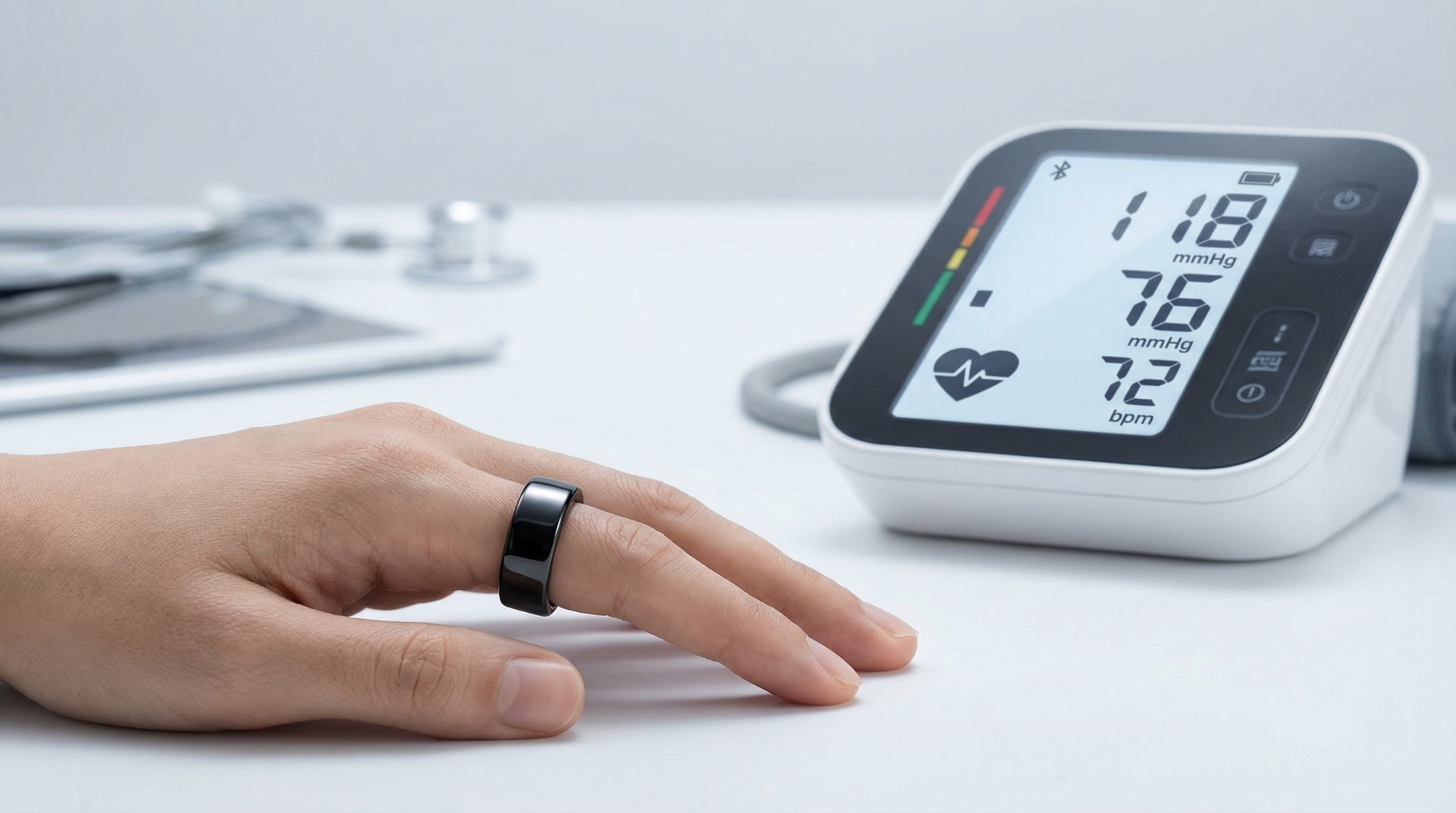
The Oura Ring does not measure blood pressure. Neither the Gen 3 nor the Ring 4 shows systolic/diastolic numbers — Oura's Blood Pressure Profile Study (Dec 2025) is investigational, with FDA-cleared risk detection expected no sooner than late 2026–2027. Until then, take readings with a validated cuff and log them in a free blood pressure app like Cardilog, or start on paper with a free printable blood pressure log PDF.
Current status: Oura Ring does not measure blood pressure
As of April 2026, neither the Oura Ring Gen 3 nor the Oura Ring 4 can measure or track your blood pressure. You will not find systolic or diastolic numbers anywhere in the Oura app. The official Ring 4 product page on ouraring.com lists sleep, readiness, daytime stress, heart rate, HRV, temperature, and SpO2 — blood pressure is not advertised as a feature. If you need blood pressure monitoring, you still need a traditional cuff or a device with FDA clearance for blood pressure measurement.
Oura does track related cardiovascular metrics like heart rate, heart rate variability (HRV), respiratory rate, and Cardiovascular Age (based on pulse wave velocity). These give insight into your heart health and stress levels, but they do not translate into the two-number blood pressure reading that doctors use to diagnose or manage hypertension.
What Oura tracks today
The Blood Pressure Profile Study: December 2025
In December 2025, Oura launched the Blood Pressure Profile Study in Oura Labs. This is an investigational research program, not a released product feature. It is optional and available only to eligible Oura members in the United States.
The study aims to develop a software feature that can help users spot hidden risk of hypertension. It does not provide systolic and diastolic blood pressure numbers. Instead, it analyzes continuous biometric data from the Oura Ring to identify patterns that correlate with elevated blood pressure risk.
To participate, you wear your Oura Ring as usual and answer a few background health questions in the app. Oura then translates signals from your PPG sensors, heart rate, and other biometrics into cardiovascular insights. No blood pressure cuff is required.
Who can join the study
- U.S.-based Oura members aged 22 or older
- Using the English version of the Oura app
- Wearing an Oura Ring Gen 3 or Oura Ring 4
- Not currently pregnant or within 12 weeks postpartum
- No cardiac implants such as pacemakers
If you meet these criteria, you can join through the Oura Labs section of the app. The study is registered on ClinicalTrials.gov under NCT07267871.
How PPG-based blood pressure detection works
Oura, like most wearable devices, uses photoplethysmography (PPG) to monitor your heart. A PPG sensor emits infrared light into your finger and measures how much light reflects back. As your heart beats, blood volume in the finger arteries changes, which alters the amount of light absorption. This creates a waveform that tracks your pulse.
Blood pressure estimation from PPG relies on analyzing the shape and timing of this waveform. Researchers look at pulse wave velocity (PWV), the speed at which the pressure wave travels through your arteries. Higher blood pressure stiffens arteries, which increases pulse wave velocity. Lower blood pressure makes arteries more compliant, slowing the wave.
Oura can extract features from the PPG signal that correlate with arterial stiffness and vascular health. The ring already uses this approach for its Cardiovascular Age metric. Extending this to hypertension detection means training machine learning models on large datasets of PPG signals paired with actual blood pressure measurements from clinical cuffs.
| Method | Measurement Type | Accuracy | Calibration | Use Case |
|---|---|---|---|---|
| Traditional cuff (oscillometric) | Direct systolic and diastolic | Clinical standard (±3 mmHg) | Not required | Diagnosis and treatment monitoring |
| PPG-based estimation (Oura, RingConn) | Hypertension risk detection | Trend monitoring (±5-12 mmHg variability) | Varies by device | Awareness and early warning |
| Apple Watch (single-site PPG + algorithm) | Elevated readings notification | Not disclosed; FDA cleared for notification, not measurement | No calibration | Hypertension risk alert |
| Samsung Galaxy Watch (PPG-based) | Estimated systolic and diastolic | Requires calibration; accuracy varies | Periodic cuff calibration required | Trend tracking (not FDA approved in U.S.) |
Technical limitations of PPG-based blood pressure monitoring
PPG sensors measure blood volume changes, not direct pressure. This introduces several challenges:
- Single-site PPG (finger only) lacks a second measurement point needed for traditional pulse transit time calculation
- PPG signal quality is affected by skin temperature, motion, ambient light, and ring fit
- Algorithms require large training datasets to generalize across age, sex, ethnicity, and health conditions
- Without calibration, accuracy can drift over time due to changes in vascular health or sensor placement
- FDA clearance requires rigorous clinical validation showing accuracy comparable to medical-grade devices
For these reasons, most wearable blood pressure features focus on risk detection and trend awareness rather than absolute measurements. Oura is taking the same approach, aiming for an early-warning system rather than a cuff replacement.
FDA approval timeline and regulatory path
Oura announced in October 2025 that it is pursuing FDA clearance for a blood pressure detection feature. The company stated that it has FDA approval to validate and define the feature in the Blood Pressure Profile Study, which began in December 2025.
The regulatory process involves several stages:
- Clinical validation study: collect data from thousands of users wearing Oura Rings while simultaneously measuring blood pressure with medical-grade cuffs
- Algorithm development and testing: train machine learning models to detect hypertension risk patterns with sufficient sensitivity and specificity
- FDA submission: file a 510(k) premarket notification or De Novo request, depending on how Oura classifies the feature
- FDA review and clearance: the FDA evaluates safety, effectiveness, and clinical validation data before granting clearance
- Software release: once cleared, Oura rolls out the feature to Ring 4 and Gen 3 users via app update
Based on industry timelines, FDA clearance is unlikely before late 2026 or early 2027. Apple took several years to develop and gain clearance for its irregular rhythm notification and blood oxygen features. Oura is following a similar path, starting with research, collecting real-world data, and building a regulatory-grade evidence base.
Not a medical device yet
Oura Ring Gen 3 vs Ring 4: blood pressure feature differences
Both the Oura Ring Gen 3 and Ring 4 are eligible for the Blood Pressure Profile Study. The feature is software-based and relies on PPG sensors that both models have. There is no hardware difference for blood pressure detection between Gen 3 and Ring 4.
Ring 4 does have improved sensor architecture. Oura claims a 120% improvement in SpO2 signal quality, translating to 30% better accuracy in overnight blood oxygen measurement. This upgrade may indirectly benefit blood pressure algorithms, since SpO2 and heart rate data are inputs to cardiovascular risk models.
However, Gen 3 is likely near the end of its feature update lifecycle. Oura released Ring 4 in October 2024, and Gen 3 launched in November 2021. If the FDA-cleared blood pressure feature arrives in 2027, Gen 3 will be over five years old. Oura may limit new features to Ring 4 to encourage upgrades.
For now, both models have equal access to the Blood Pressure Profile Study. If you already own a Gen 3, you do not need to upgrade to Ring 4 to participate in the research. But if you are buying new and want the best chance of receiving the blood pressure feature when it launches, Ring 4 is the safer bet.
RingConn vs Oura: who has blood pressure first
RingConn Gen 3, released in January 2026, already includes blood pressure insights. This puts RingConn ahead of Oura in the blood pressure race, at least in terms of availability. But there are important distinctions.
RingConn does not provide systolic and diastolic blood pressure numbers. It uses heart rate, SpO2, skin temperature, and accelerometer data to flag elevated blood pressure risk. The feature is not FDA approved or medically validated. It is a wellness insight, not a diagnostic tool.
RingConn also does not require calibration with a blood pressure cuff. This makes it more convenient than devices like Samsung Galaxy Watch, which need periodic cuff calibration to maintain accuracy. However, the lack of calibration also means accuracy is harder to verify.
| Feature | Oura Ring 4 | Oura Gen 3 | RingConn Gen 3 |
|---|---|---|---|
| Blood pressure measurement | No (Oura Labs study only) | No (Oura Labs study only) | Risk detection only |
| FDA clearance for BP | Pending | Pending | No |
| PPG sensors | Yes (improved Smart Sensing) | Yes | Yes |
| Calibration required | Announced no | Announced no | No |
| Subscription fee | $5.99/mo or $69.99/yr | $5.99/mo or $69.99/yr | None |
| Price | $349-499 | $299 (discounted) | $279-299 |
| Battery life | 5-8 days | 5-7 days | 8-10 days |
| Water resistance | 100m / 328 ft | 100m / 328 ft | 50m |
| Haptic feedback | No | No | Yes (vibration motor) |
For users who want blood pressure insights today and do not need medical validation, RingConn is a lower-cost alternative with no subscription. For users who want FDA-cleared features and deeper health analytics, Oura is the better long-term investment, assuming the blood pressure feature gains clearance.
Apple Watch vs Oura Ring for blood pressure detection
Apple Watch has taken a different approach to blood pressure. In September 2025, Apple launched hypertension notifications on Apple Watch Series 10 and Ultra 3. This feature does not measure blood pressure. It uses PPG data, wrist motion, and health history to detect patterns consistent with elevated blood pressure and notifies you to see a doctor.
Apple received FDA clearance for this notification feature, which is a lower regulatory bar than full blood pressure measurement. The watch does not display systolic or diastolic numbers. It is an alert system, not a replacement for a cuff.
Oura is likely pursuing a similar regulatory pathway. The Blood Pressure Profile Study language suggests Oura will offer hypertension risk alerts, not continuous blood pressure tracking. This is easier to validate clinically and aligns with Oura's wellness device classification.
The key difference: Apple Watch requires you to wear it 24/7, which many people find uncomfortable during sleep. Oura Ring is designed for sleep tracking and worn all night, giving it better access to nocturnal heart data. Nighttime blood pressure dipping patterns are clinically significant for cardiovascular risk, and Oura has an advantage here.
What you can track on Oura Ring today (no blood pressure required)
Even without blood pressure monitoring, the Oura Ring tracks several cardiovascular and autonomic nervous system metrics that correlate with blood pressure and heart health:
Heart rate variability (HRV)
HRV measures the beat-to-beat variation in your heart rate. Higher HRV generally indicates better cardiovascular fitness, recovery, and autonomic balance. Lower HRV is associated with stress, fatigue, illness, and cardiovascular disease. People with hypertension often have reduced HRV.
Oura tracks HRV overnight and provides a trend chart. You can use this to monitor stress, recovery, and overall heart health, even if you do not have a blood pressure reading.
Cardiovascular Age
Oura's Cardiovascular Age feature estimates your vascular age based on pulse wave velocity extracted from PPG signals. This metric correlates with arterial stiffness, which is a key factor in blood pressure regulation. Higher arterial stiffness means higher blood pressure and increased cardiovascular risk.
If your Cardiovascular Age is higher than your chronological age, it suggests your arteries are stiffer than average for your age group. This is an indirect indicator of cardiovascular health that can motivate lifestyle changes like exercise, diet, and stress management.
Resting heart rate trends
Elevated resting heart rate is associated with higher blood pressure and increased risk of hypertension. Oura tracks your resting heart rate every night and provides a long-term trend. If your resting heart rate climbs over weeks or months, it may signal increased cardiovascular strain or stress.
While resting heart rate is not blood pressure, it is a simple, well-validated cardiovascular marker. A resting heart rate consistently above 80 bpm in adults is linked to higher risk of hypertension and heart disease.
Oura Ring 4 hardware specs (October 2024 release)
The Ring 4 is Oura's flagship as of 2026. Even without blood pressure measurement, it's the best-built ring Oura has shipped, and the platform on which any future BP feature will roll out. Here is exactly what it offers today, taken from the official ouraring.com Ring 4 product page.
| Spec | Oura Ring 4 |
|---|---|
| Material | Non-allergenic titanium, seamless interior, recessed sensors |
| Finishes | Silver, Black, Brushed Silver, Stealth, Gold, Rose Gold (6 options) |
| Sizing | Whole sizes 4-15 (US); free sizing kit before purchase |
| Width / Thickness | 7.90 mm wide, 2.88 mm thick |
| Weight | 3.3-5.2 g depending on size |
| Battery | 5-8 days; full charge in 20-80 minutes |
| Water resistance | Up to 100 m / 328 ft |
| Sensors | Red + IR LEDs (SpO2), green + IR LEDs (24/7 HR + HRV), temperature, accelerometer |
| Smart Sensing | Adaptive sensor pathing — finds best signal across finger position |
| Connectivity | Bluetooth Low Energy to iOS or Android Oura app |
| Subscription | $5.99/month or $69.99/year (first month free) |
| Launch price | From $349 (Silver) up to $499 (Gold/Rose Gold) |
What's new vs Oura Ring Gen 3
- Sensor upgrade: Oura claims 120% better SpO2 signal quality and 30% better overnight blood oxygen accuracy
- Smaller, fully round interior — sensors are recessed flush into the ring shell instead of bumps inside the band
- Smart Sensing: 18 PPG signal pathways instead of fixed sensor placement, improving accuracy when the ring rotates on the finger
- 2 extra finishes (Brushed Silver and Rose Gold) and 4 more whole sizes (4-15 vs 6-13)
- Same battery range (5-7 days on Gen 3, 5-8 days on Ring 4) but faster top-up charging
What it tracks today (no blood pressure)
The Ring 4 product page advertises Sleep Score and stages, Readiness, daytime stress, resilience, 24/7 heart rate, HRV, blood oxygen, body temperature trends, automatic detection of 40+ activities, Cardiovascular Age, Cardio Capacity (VO2 Max estimate), and cycle insights. Blood pressure is not on this list — it's only available to U.S. members who opt into the Blood Pressure Profile Study via Oura Labs.
Why the SpO2 upgrade matters for future BP
Should you wait for Oura blood pressure or buy now
If you are buying an Oura Ring primarily for blood pressure monitoring,you will be waiting at least until 2027. The Blood Pressure Profile Study is still in data collection phase. FDA clearance takes months to years after study completion. Even optimistic timelines put a public release in late 2026 at the earliest.
If you need blood pressure monitoring now, buy a validated home blood pressure monitor. Devices like Omron Evolv, Withings BPM Connect, or QardioArm are clinically accurate, affordable, and available today. They are the gold standard for home blood pressure tracking.
If you value sleep tracking, recovery insights, HRV, and general wellness data, Oura Ring is excellent today without blood pressure. You can buy it now and benefit from the existing features while waiting for the blood pressure update. Ring 4 is the safer choice for future updates.
If you want blood pressure insights from a ring-form factor and do not need FDA clearance, RingConn Gen 3 is available now, costs less, and has no subscription. It is not a medical device, but it provides hypertension risk awareness.
Track your blood pressure with Cardilog
Final thoughts
The Oura Ring does not measure blood pressure today, and it may not for another year or more. The December 2025 Blood Pressure Profile Study is a research program, not a released feature. If Oura receives FDA clearance in 2026 or 2027, the ring will offer hypertension risk detection, not full blood pressure measurement.
For users who need medical-grade blood pressure monitoring, a traditional cuff is still the only reliable option. For users who want cardiovascular trend insights from a comfortable, sleep-focused wearable, Oura is one of the best devices available, with or without blood pressure.
RingConn offers blood pressure insights today, Apple Watch offers hypertension notifications, and Samsung Galaxy Watch offers cuffless estimation with calibration — see how they compare in our guide to wearable blood pressure monitors. Oura is playing the long game, focusing on clinical validation and regulatory approval rather than rushing a wellness feature to market.
For now, if you want an Oura Ring, buy it for sleep, recovery, HRV, and Cardiovascular Age. The blood pressure feature, when it arrives, will be a bonus, not the main event.