
What happens to blood pressure during a cold plunge
When you step into cold water, your body does not wait to see if you are in danger. It reacts immediately. The moment water below 15°C touches your skin, cold receptors send signals to your brain, triggering the cold shock response.
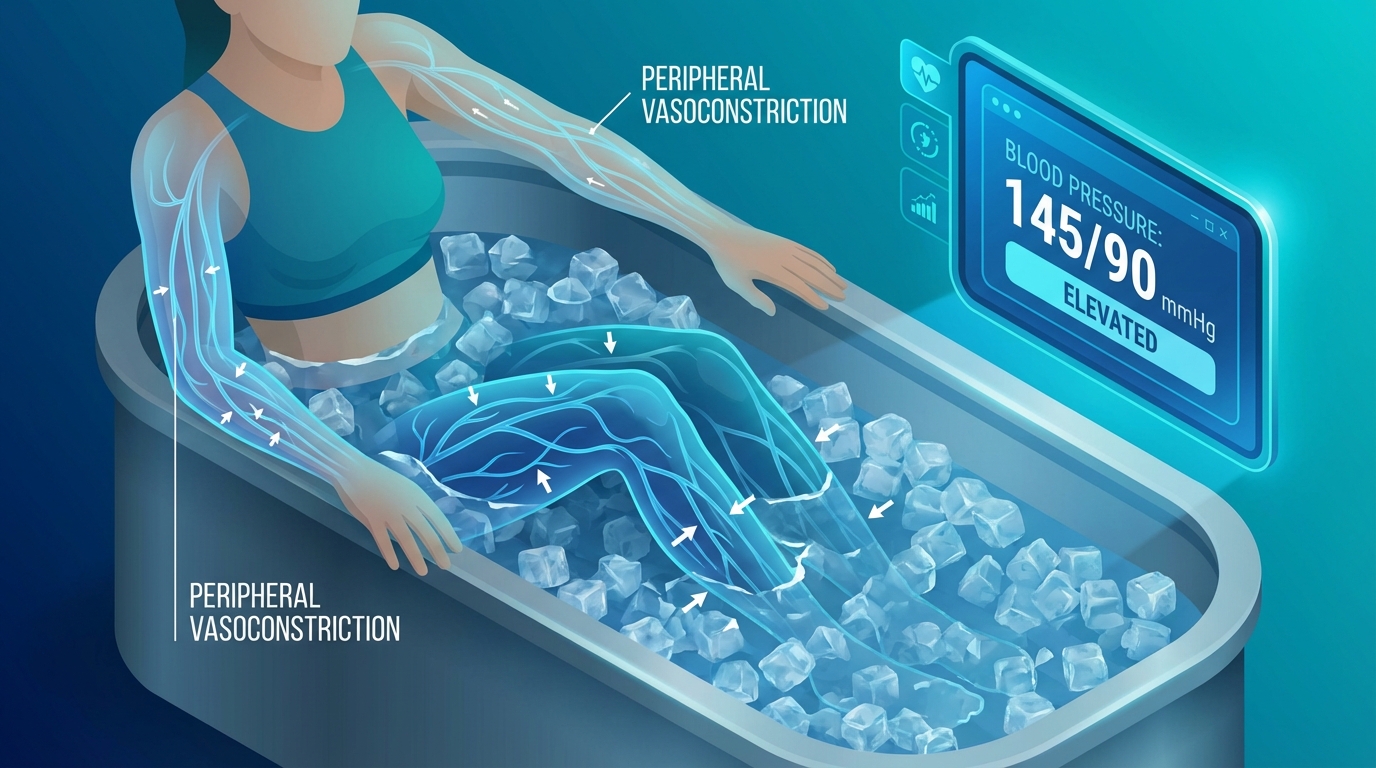
Within seconds, your sympathetic nervous system fires up. Blood vessels in your skin, arms, and legs constrict sharply to minimize heat loss. This vasoconstriction redirects blood flow from the periphery to the core, where your vital organs are. At the same time, your heart rate spikes and your breathing becomes rapid and shallow.
The result: blood pressure rises. Systolic pressure typically increases by 15-25 mmHg during cold water immersion. For someone with a baseline of 120/80, that means a jump to 135-145/85 or higher. The increase is not subtle, and it is not optional. Your cardiovascular system is responding to what it perceives as a survival threat.
| Phase | Timing | Cardiovascular Response | Blood Pressure Effect |
|---|---|---|---|
| Cold shock (initial immersion) | 0-90 seconds | Gasping, hyperventilation, tachycardia, peripheral vasoconstriction | +15-25 mmHg systolic |
| Adaptation phase | 2-5 minutes | Breathing normalizes, heart rate stabilizes, vasoconstriction sustained | Elevated (10-20 mmHg above baseline) |
| Exit and rewarming | 5-15 minutes after exit | Vasodilation, heart rate drops, sympathetic withdrawal | Returns to baseline or briefly drops below |
| Post-immersion | 15-60 minutes | Full thermoregulation restored | Baseline, possible mild hypotension in some people |
The magnitude of the blood pressure spike depends on several factors: water temperature, how much of your body is immersed, whether your face is submerged, and how accustomed you are to cold exposure. First-time cold plungers experience the most dramatic response.
The cold shock response: why your body panics
The cold shock response evolved as a protective mechanism. When early humans fell into cold water, survival depended on getting out fast. The body primes itself for immediate action: muscles tense, heart pounds, breathing accelerates.
But this response is a double-edged sword. While the cardiovascular surge prepares you for escape, it also puts sudden strain on the heart. For someone with underlying cardiovascular disease or uncontrolled high blood pressure, this strain can be dangerous.
Cold shock can be life-threatening
The diving reflex: a competing physiological response
When your face, particularly the area around your eyes and nose, is immersed in cold water, a different reflex kicks in: the mammalian diving reflex. This is the same mechanism that allows seals and whales to dive for extended periods.
The diving reflex activates the parasympathetic nervous system, slowing heart rate (bradycardia) and redirecting blood flow to the brain and heart. Unlike the cold shock response, which is sympathetic and stress-driven, the diving reflex is calming and oxygen-conserving.
Here is where things get interesting: during full cold water immersion with face submersion, both the cold shock response (sympathetic) and the diving reflex (parasympathetic) are activated at the same time. This is calledautonomic conflict. Your heart is receiving simultaneous signals to speed up and slow down. Blood pressure may stay elevated or even increase further despite the drop in heart rate because of sustained vasoconstriction.
A 2012 study in The Journal of Physiology showed that this autonomic conflict can cause arrhythmias in susceptible individuals. The simultaneous activation of opposing cardiovascular pathways creates electrical instability in the heart.
Long-term cardiovascular adaptation to cold exposure
While the acute blood pressure spike during cold immersion is well documented, the long-term effects of repeated cold exposure are less clear. Some research suggests that regular cold plunging may improve cardiovascular resilience through adaptation.
Improved vagal tone
Studies have shown that repeated cold water immersion increases heart rate variability (HRV), a marker of strong vagal tone and parasympathetic nervous system activity. Higher HRV is associated with better cardiovascular health and lower cardiovascular mortality risk. A 2025 meta-analysis found that cold water immersion after exercise accelerated parasympathetic reactivation, improving recovery and reducing resting heart rate over time.
Reduced cold shock severity
People who practice regular cold exposure experience less intense cold shock over time. A 2024 study in Physiological Reports found that habituated ice swimmers had smaller heart rate and blood pressure increases during immersion compared to first-time plungers. The body learns to anticipate and moderate the stress response.
Vascular adaptation
Some evidence suggests that the repeated cycle of vasoconstriction during cold exposure and vasodilation during rewarming may improve blood vessel elasticity and function. This is similar to the vascular benefits seen with heat exposure (like sauna use). However, direct evidence linking regular cold plunging to sustained reductions in resting blood pressure is limited.
| Claimed Benefit | Evidence Strength | What Studies Show |
|---|---|---|
| Improved heart rate variability | Moderate | Several studies show increased HRV after repeated cold exposure |
| Reduced resting heart rate | Moderate | Regular cold swimmers show lower resting HR over weeks |
| Lower resting blood pressure | Weak | Mixed results; no large RCTs showing sustained BP reduction |
| Better vascular function | Weak | Some improvement in endothelial function markers in small studies |
| Reduced cold shock severity | Strong | Well-documented habituation effect in regular practitioners |
The bottom line: cold plunging may support cardiovascular health in healthy individuals as part of a broader wellness routine, but it is not a proven standalone treatment for high blood pressure. If blood pressure control is your goal, exercise, diet, and medication (when needed) have far stronger evidence.
Who should not do cold plunges
Avoid cold plunges if you have
• History of heart attack, angina, or heart failure
• Arrhythmias or irregular heartbeat
• Aortic aneurysm or other vascular conditions
• History of stroke or transient ischemic attack (TIA)
• Severe asthma or COPD (cold shock worsens breathing)
• Raynaud disease or extreme cold sensitivity
• Pregnancy (consult your doctor first)
If you are on blood pressure medication, particularly beta-blockers, talk to your doctor before starting cold exposure. Beta-blockers slow heart rate, which could amplify the bradycardia from the diving reflex and cause excessively low heart rates or dizziness.
Safe cold plunge protocols for people with hypertension
If your blood pressure is well controlled (consistently below 140/90 on medication or lifestyle management) and your doctor approves, you may be able to try cold exposure with careful habituation:
1. Start with contrast showers
Before attempting full immersion, spend 2-3 weeks doing contrast showers: alternate 30 seconds of cold water with 2 minutes of warm water for 3-5 cycles. End with cold. This acclimates your nervous system to cold exposure with minimal cardiovascular strain.
2. Begin with warmer water and shorter sessions
Your first cold plunge should be 15-18°C (59-64°F), not ice water. Start with 1-2 minutes. Gradually decrease temperature and increase duration over weeks. Do not rush into 5-minute ice baths.
3. Avoid face immersion initially
Keep your head above water for the first several sessions to avoid triggering the diving reflex on top of cold shock. Once you are comfortable with body immersion, you can experiment with brief face submersion.
4. Breathe through the shock
The first 30-90 seconds are the hardest. Focus on slow, controlled breathing. Resist the urge to gasp or hyperventilate. Controlled breathing reduces the sympathetic surge and helps stabilize blood pressure.
5. Check your blood pressure response
Measure your blood pressure before and 10-15 minutes after cold exposure for the first several sessions. If your BP stays elevated above 160/100 for more than 15 minutes post-plunge, stop cold exposure and consult your doctor. Use a hypertension tracker to log your response over time.
Cold plunge vs infrared sauna for cardiovascular health
Both cold exposure and heat exposure (sauna) are popular for cardiovascular wellness, but they work through opposite mechanisms. Saunas cause vasodilation, lower blood pressure during the session, and improve vascular compliance. Cold plunges cause vasoconstriction and raise blood pressure acutely.
For people with hypertension, infrared sauna use is generally safer and has stronger evidence for blood pressure reduction than cold plunging. A 2024 review found that regular sauna use (4-7 times per week) reduced resting systolic BP by 4-9 mmHg. If you want temperature-based cardiovascular stress, heat exposure may be the better starting point for hypertension patients.
The bottom line
Cold plunges cause an immediate blood pressure spike due to peripheral vasoconstriction and sympathetic activation. For healthy individuals, this acute response is temporary and harmless. Over time, regular cold exposure may improve cardiovascular adaptation through better vagal tone and reduced cold shock severity.
However, cold plunging is not a magic bullet for high blood pressure, and it carries real risks for people with cardiovascular conditions. If you have uncontrolled hypertension or heart disease, cold immersion can be dangerous. Even if your blood pressure is in the normal range, approach cold exposure gradually and listen to your body.
For proven blood pressure management, focus on regular exercise, a DASH diet, stress reduction, and medication when needed. Cold plunges can be a complementary tool for resilience and recovery, but they are not a substitute for evidence-based hypertension treatment.