Track your readings — and the warning signs — in one place.
Cardilog logs morning + evening readings, charts your trend across pregnancy, and exports a clean summary for prenatal visits.


How blood pressure changes during pregnancy
Pregnancy puts extraordinary demands on your cardiovascular system. Your blood volume increases by 40-50%, your heart pumps 30-50% more blood per minute, and your blood vessels undergo dramatic changes to support the growing baby. These changes affect blood pressure in predictable patterns across the three trimesters.
| Trimester | Typical Systolic BP | Typical Diastolic BP | What Happens |
|---|---|---|---|
| Pre-pregnancy baseline | 110-120 mmHg | 70-80 mmHg | Your normal resting blood pressure before conception |
| First trimester (1-12 weeks) | 110-120 mmHg | 70-80 mmHg | Blood pressure similar to pre-pregnancy baseline or slightly lower |
| Second trimester (13-26 weeks) | 100-115 mmHg | 60-75 mmHg | Blood pressure drops 5-10 mmHg due to vessel relaxation from progesterone |
| Third trimester (27-40 weeks) | 110-120 mmHg | 70-80 mmHg | Blood pressure gradually returns closer to first trimester levels |
| Postpartum (after delivery) | Returns to baseline | Returns to baseline | Usually normalizes within 12 weeks; monitor for postpartum preeclampsia |
The second-trimester dip is completely normal. Progesterone relaxes the smooth muscle in blood vessel walls, reducing resistance. By the third trimester, increased blood volume and cardiac output bring blood pressure back up. If you had normal blood pressure before pregnancy, you should stay below 120/80 throughout. Readings consistently at or above 140/90 are considered high at any stage.
High blood pressure in pregnancy: the types
High blood pressure during pregnancy falls into several categories. The distinction matters because the risks, management, and outcomes differ.
Chronic hypertension
This is high blood pressure that existed before pregnancy or is diagnosed before 20 weeks of gestation. It affects about 1-5% of pregnancies. Women with chronic hypertension have an increased risk of developing preeclampsia (superimposed preeclampsia), which happens in 15-25% of cases.
If you have chronic hypertension, your obstetrician will likely switch your medication to pregnancy-safe options early. ACE inhibitors and ARBs must be stopped because they can cause serious birth defects. Safe alternatives include methyldopa, labetalol, and nifedipine. Your prenatal visits will be more frequent to monitor for complications.
Gestational hypertension
Gestational hypertension is high blood pressure (140/90 or higher) that develops after 20 weeks of pregnancy in a woman who had normal blood pressure before. There is no protein in the urine and no signs of organ damage. It affects 6-8% of pregnancies.
Most cases are mild and resolve within 12 weeks of delivery. However, about 15-25% of women with gestational hypertension go on to develop preeclampsia. Your doctor will monitor you closely with weekly or twice-weekly blood pressure checks, urine tests for protein, and blood tests for liver and kidney function.
Preeclampsia
Preeclampsia is the most serious blood pressure complication of pregnancy. It affects 2-8% of pregnancies worldwide and is one of the leading causes of maternal and fetal morbidity and mortality. It is defined as high blood pressure after 20 weeks plus one or more of the following:
- Protein in the urine (300 mg or more in 24 hours, or protein/creatinine ratio of 0.3 or higher)
- Signs of kidney dysfunction (creatinine above 1.1 mg/dL or doubling of creatinine)
- Liver involvement (elevated liver enzymes to twice normal, severe upper right abdominal pain)
- Low platelet count (thrombocytopenia below 100,000/microliter)
- Pulmonary edema (fluid in the lungs, causing shortness of breath)
- New-onset headache unresponsive to medication, or visual disturbances (blurred vision, seeing spots or flashing lights)
The exact cause of preeclampsia is not fully understood, but it involves abnormal placental development and widespread inflammation that damages blood vessel linings throughout the body. The only cure is delivery of the baby and placenta. If preeclampsia develops before 37 weeks, doctors balance the risk of early delivery against the risk of worsening disease.
HELLP syndrome: the dangerous variant
Warning signs you should never ignore
Preeclampsia can develop suddenly, even in women with no prior risk factors. The American College of Obstetricians and Gynecologists (ACOG) recommends that all pregnant women learn the warning signs and call their provider immediately if any of the following occur:
Call your doctor or go to the ER if you have
Vision changes such as blurred vision, seeing spots, flashing lights, or temporary vision loss
Upper right abdominal pain or severe pain just below the ribs on the right side (this can indicate liver swelling)
Sudden swelling of the face, around the eyes, or in the hands. Gradual swelling of feet and ankles is common in pregnancy, but sudden facial or hand swelling is not normal
Nausea and vomiting after the first trimester, especially if accompanied by other symptoms
Difficulty breathing or shortness of breath, which can be a sign of fluid in the lungs (pulmonary edema)
Decreased fetal movement or if your baby is not moving as much as usual
The onset of severe preeclampsia can happen in a matter of hours. Do not wait until your next scheduled prenatal visit if you notice any of these symptoms. Delays in diagnosis and treatment can lead to seizures (eclampsia), stroke, placental abruption, organ failure, or death.
Who is at higher risk for high blood pressure in pregnancy
Certain risk factors increase the likelihood of developing gestational hypertension or preeclampsia. If you have one or more of these, your provider will monitor you more closely throughout pregnancy:
| Risk Factor | Why It Matters | Increased Risk |
|---|---|---|
| First pregnancy | Immune system first exposure to placental proteins | 2-3x higher risk |
| Age over 35 | Vascular changes and chronic inflammation increase with age | 2x higher risk |
| Obesity (BMI > 30) | Inflammation, insulin resistance, endothelial dysfunction | 2-3x higher risk |
| Multiple pregnancy (twins, triplets) | Larger placenta, greater vascular demand | 3x higher risk |
| History of preeclampsia | Underlying vascular or immune predisposition | 7-8x higher risk |
| Chronic hypertension | Pre-existing vascular damage | 5-7x higher risk (for superimposed preeclampsia) |
| Chronic kidney disease | Reduced renal function and vascular health | 3-5x higher risk |
| Diabetes (type 1 or 2) | Vascular damage and inflammation | 2-4x higher risk |
| Autoimmune disease (lupus, antiphospholipid syndrome) | Immune-mediated vascular damage | 5-10x higher risk |
| Family history of preeclampsia | Genetic predisposition | 2-3x higher risk |
If you are at high risk, your doctor may recommend low-dose aspirin (81 mg daily) starting at 12 weeks of pregnancy and continuing until delivery. Large studies have shown that aspirin reduces preeclampsia risk by about 15-20% in high-risk women.
How to monitor blood pressure at home during pregnancy
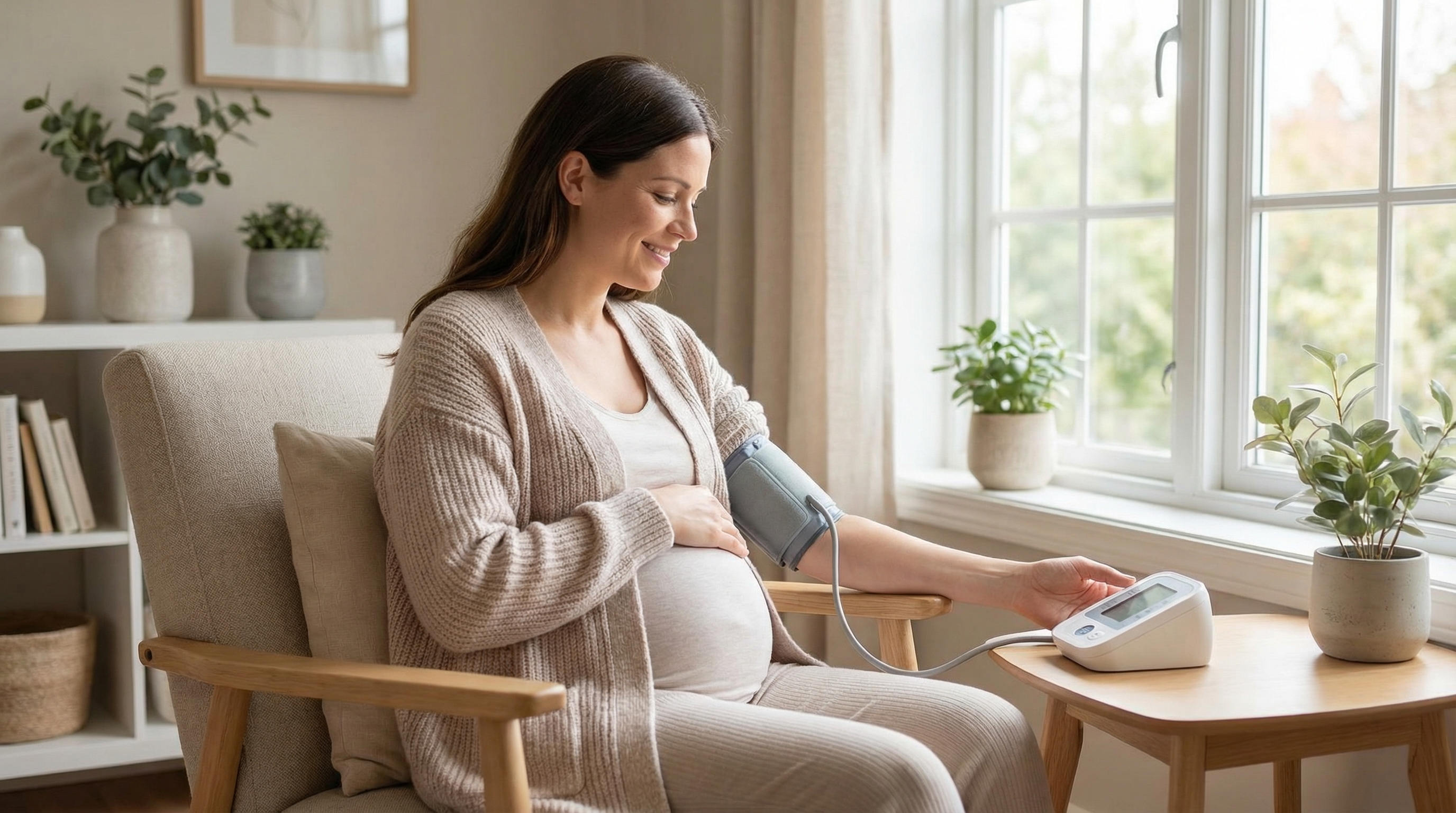
Home blood pressure monitoring is especially valuable in the third trimester and if you have any risk factors for hypertension. It allows early detection of rising trends before they become dangerous. Follow these guidelines for accurate readings:
- Use a validated automatic upper-arm cuff. Wrist monitors are not accurate during pregnancy. Make sure the cuff is the right size for your arm. Check the manufacturer guidelines to confirm you have the right cuff size.
- Measure at the same time each day. Blood pressure varies throughout the day. Measuring in the morning before breakfast and in the evening before dinner gives consistent comparison points.
- Sit quietly for 5 minutes before measuring. Rest with your back supported, feet flat on the floor, and arm supported at heart level. Do not cross your legs.
- Take two or three readings. Wait 1-2 minutes between readings. If the numbers are very different, take a third reading and average the results.
- Log your results. Write down the date, time, systolic and diastolic numbers, and any symptoms you are experiencing. Share this log with your provider at every visit. A blood pressure log helps track trends over time.
- Know when to call. If your systolic is 140 or higher, or diastolic is 90 or higher on two readings four hours apart, call your doctor. If either number is 160/110 or higher, call immediately.
Managing high blood pressure during pregnancy
Treatment depends on the severity of hypertension and how far along you are in pregnancy. The goal is to protect both you and your baby while allowing the pregnancy to continue as long as safely possible.
Lifestyle modifications
If you have mild gestational hypertension (140-159/90-109 mmHg) and no signs of organ damage, your doctor may initially recommend close monitoring without medication. Lifestyle strategies can help:
- Rest and reduce stress. Physical and emotional stress raise blood pressure. Reduce work hours if possible, delegate tasks, and prioritize sleep.
- Avoid excess salt, but do not restrict it completely. Sodium restriction is controversial in pregnancy. Moderate intake (2,300 mg per day) is reasonable, but severe restriction can worsen outcomes.
- Stay hydrated. Dehydration can reduce blood volume and worsen blood pressure regulation.
- Light physical activity if cleared by your doctor. Gentle walking or prenatal yoga can help, but avoid strenuous exercise if you have hypertension.
- Monitor for symptoms daily. Keep track of headaches, vision changes, or abdominal pain and report them immediately.
Medications
If blood pressure is consistently above 160/110, or if you have preeclampsia with severe features, medication is necessary to reduce the risk of stroke and organ damage. Pregnancy-safe medications include:
| Medication | Type | How It Works | Common Use |
|---|---|---|---|
| Methyldopa | Central alpha agonist | Reduces nerve signals that tighten blood vessels | First-line for chronic hypertension in pregnancy |
| Labetalol | Beta blocker | Slows heart rate and reduces force of contractions | First-line for acute blood pressure spikes and chronic use |
| Nifedipine | Calcium channel blocker | Relaxes blood vessel walls | Second-line or combined with other medications |
| Hydralazine | Vasodilator | Directly relaxes arterial smooth muscle | Used for severe acute hypertension (IV in hospital) |
Do not take ACE inhibitors, ARBs, or direct renin inhibitors during pregnancy. These medications can cause serious fetal harm, including kidney damage, skull defects, and death. If you were on these medications before pregnancy, your doctor will switch you to safer alternatives as soon as you find out you are pregnant.
When delivery is the only option
The only definitive cure for preeclampsia is delivery. If you develop severe preeclampsia (blood pressure above 160/110, signs of organ damage, or symptoms like severe headache and vision changes), your doctor will usually recommend delivery regardless of gestational age.
Before 34 weeks, if the condition is stable, doctors may attempt to delay delivery by 48 hours to administer corticosteroids (betamethasone or dexamethasone), which accelerate fetal lung maturity. After 34 weeks, or if the mother or baby is in immediate danger, delivery is recommended.
Postpartum blood pressure: the 6-week watch
Blood pressure does not always return to normal immediately after delivery. In fact, blood pressure often peaks 3-6 days postpartum due to fluid shifts as the body reabsorbs the extra blood volume from pregnancy. Some women develop preeclampsia for the first time after delivery (postpartum preeclampsia).
Your blood pressure will be checked before you leave the hospital and again at your postpartum visit (typically 1-2 weeks after delivery, then again at 6 weeks). If you had gestational hypertension or preeclampsia, your provider may ask you to check your blood pressure at home daily for the first two weeks.
Postpartum warning signs (call your provider immediately)
Severe headache or vision changes in the first 6 weeks postpartum
Upper right abdominal pain, nausea, or vomiting after delivery
Shortness of breath or chest pain
Most women with gestational hypertension or preeclampsia return to normal blood pressure within 12 weeks. However, having these conditions increases your long-term risk of chronic hypertension and cardiovascular disease. A 2022 analysis found that women with a history of preeclampsia have a 3-4 times higher risk of developing hypertension later in life and a 2 times higher risk of heart disease and stroke.
If you had gestational hypertension or preeclampsia, schedule a follow-up with your primary care doctor or cardiologist 3-6 months postpartum to assess your cardiovascular risk and discuss long-term prevention strategies. If that appointment is hard to arrange locally, you can request a video consult with a cardiologist and go through your readings and pregnancy history with them.
The bottom line
Blood pressure naturally fluctuates during pregnancy, dipping in the second trimester and rising back toward baseline in the third. But consistent readings of 140/90 or higher are never normal and require medical evaluation. Gestational hypertension and preeclampsia are common, affecting up to 10% of pregnancies combined, and they can develop suddenly even in women with no prior risk factors.
Home monitoring, especially in the third trimester, allows early detection of rising trends. Know the warning signs. Severe headache, vision changes, upper right abdominal pain, and sudden swelling are red flags that require immediate medical attention. Delays in diagnosing and treating preeclampsia can be fatal.
If you have risk factors, talk to your doctor about low-dose aspirin and increased monitoring. If you are diagnosed with gestational hypertension or preeclampsia, follow your treatment plan closely. Most women with mild cases deliver healthy babies at term. The key is vigilance, early detection, and timely intervention.