
Blood pressure monitors are not just gadgets; they are your gateway to understanding your heart's true potential. In this post, we reveal the mechanics behind these devices and show you how they can transform your approach to health.
The Intriguing Mechanics
At its core, a blood pressure monitor uses an inflatable cuff that wraps around your upper arm. But what happens when that cuff inflates? Let's break down the science.
Step 1: Inflation
When you start a measurement, the monitor pumps air into the cuff, compressing the brachial artery in your upper arm. The cuff inflates to a pressure higher than your expected systolic pressure—typically around 180 mmHg—temporarily stopping blood flow through the artery.
Step 2: Gradual Deflation
The monitor then slowly releases air from the cuff, usually at a rate of 2-3 mmHg per second. As the pressure decreases, blood begins to flow through the artery again—but initially in spurts, as pressure is only high enough to push through during the peak of each heartbeat.
Step 3: Detecting the Signals
Here's where the magic happens. The monitor uses one of two methods to detect when blood starts and stops flowing:
Oscillometric Method (Automatic Monitors)
Most home blood pressure monitors use the oscillometric method. As blood pulses through the partially compressed artery, it creates small oscillations (vibrations) in the cuff. The monitor's sensor detects these oscillations.
- Systolic pressure: Detected when oscillations first appear (blood starting to flow)
- Mean arterial pressure: Detected at the point of maximum oscillation (you can estimate yours from your two numbers with our mean arterial pressure calculator)
- Diastolic pressure: Detected when oscillations become very small (blood flowing freely)
The monitor uses algorithms to calculate your systolic and diastolic readings from the oscillation pattern. Different manufacturers use different algorithms, which is one reason why readings can vary slightly between devices.
Auscultatory Method (Manual/Clinical)
This is the traditional method used with a stethoscope. A healthcare provider listens for Korotkoff sounds—the distinctive sounds blood makes as it flows through a compressed artery.
- Phase 1: First clear tapping sounds = systolic pressure
- Phase 2-4: Swishing, then muffled sounds as cuff deflates
- Phase 5: Sounds disappear completely = diastolic pressure
Why Manual Readings Are the Gold Standard
Cuff Size Matters
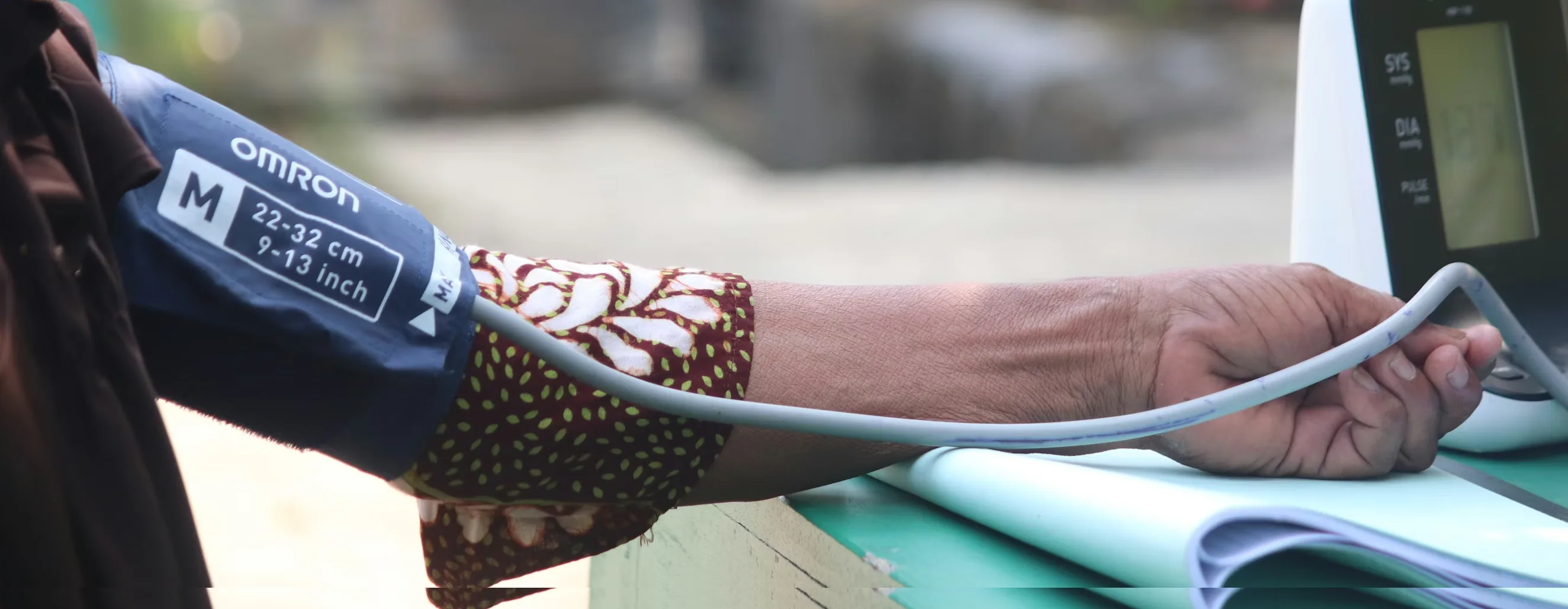
One of the most common sources of error is using the wrong cuff size. If the cuff is too small, readings will be artificially high. If it's too large, readings will be falsely low.
How to Choose the Right Cuff
Measure the circumference of your upper arm at the midpoint between shoulder and elbow:
- Small cuff: Arm circumference 22-26 cm (8.7-10.2 inches)
- Standard cuff: Arm circumference 27-34 cm (10.6-13.4 inches)
- Large cuff: Arm circumference 35-44 cm (13.8-17.3 inches)
Upper Arm vs. Wrist Monitors
Upper arm monitors are generally more accurate because the brachial artery is closer to the heart and larger, making it easier to detect blood flow accurately.
Wrist monitors can be convenient but are more sensitive to positioning errors. For a wrist monitor to be accurate, your wrist must be at heart level—which requires careful attention to arm position during measurement.
If you use an iPhone, see our picks of blood pressure cuffs that work with Apple Health.
Tips for Accurate Readings
- Use a validated monitor (check for approval from medical organizations)
- Ensure proper cuff size for your arm
- Sit quietly for 5 minutes before measuring
- Position the cuff on bare skin, about 1 inch above your elbow
- Keep your arm supported at heart level
- Don't talk or move during the measurement
- Take 2-3 readings and record the average
- Measure at the same times each day for consistency
When to Replace Your Monitor
Blood pressure monitors don't last forever. Consider replacing your device or having it checked if:
- It's more than 2-3 years old
- Readings seem inconsistent or unusually high/low
- The cuff shows signs of wear or damage
- The monitor displays error messages frequently
- Your readings differ significantly from clinical measurements
Pro Tip
Track Your Readings
Understanding how your monitor works is just the first step. The real power comes from tracking your readings over time to identify patterns and trends.
Apps like Cardilog make it easy to log each reading, visualize your blood pressure history, and generate reports to share with your healthcare provider. With consistent tracking, you'll have a clear picture of your cardiovascular health—not just a single snapshot.